Furnace and AC age
HVAC serial number decoder: how old is your furnace or AC?
Pick the brand, type the serial number from the unit's data plate, and the decoder shows the month or week and year the unit was made. It covers furnaces, air conditioners, heat pumps and ductless units from 20 common brands.
Accuracy is not guaranteed.
This decoder gives an estimate based on how brands have coded serial numbers in the past. Manufacturers change their formats, and a serial can be misread, so the results may be wrong. Use them as a starting point only. Confirm with the date printed on the plate or with the manufacturer.
Where to find the serial number
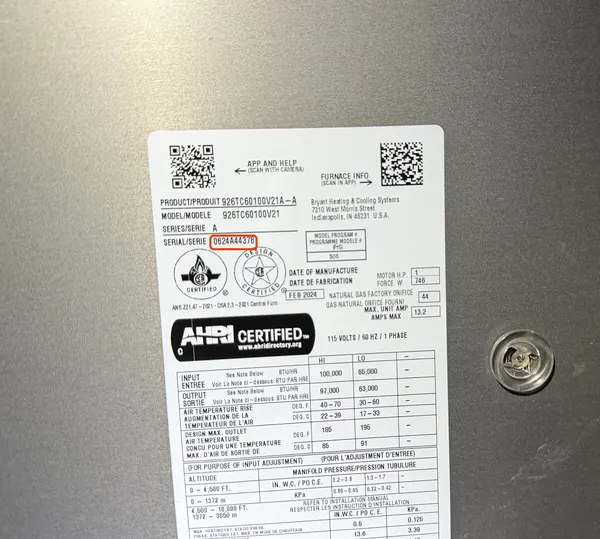
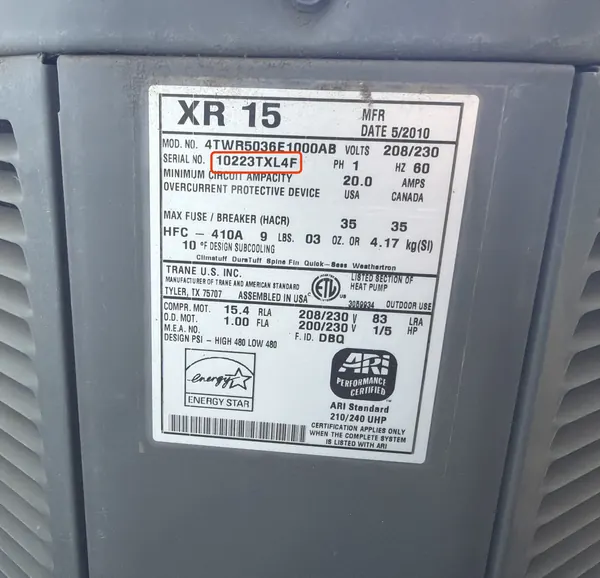
Every furnace, air conditioner and heat pump has a data plate: a metal tag or sticker with the model number, the serial number and the electrical ratings. Some plates print the date outright, marked MFG DATE, MFD or DATE OF MFG. If yours does, that is your answer and there is nothing to decode.
- Furnace. On the cabinet, often on the inside of the front door or on a side panel. Some doors lift off by hand. If a door needs a tool to open, leave it closed.
- Outdoor unit (air conditioner or heat pump). On the side or back of the cabinet, often near where the electrical lines come in. Do not open the electrical cover to read it.
- Air handler. On the cabinet, usually near the front panel.
- Ductless (mini-split). The indoor unit has a plate on its side or under the front cover, and the outdoor unit has its own plate. The two can have different dates.


What the age tells you, and what it does not
The serial number tells you when the unit was built. It does not tell you when it was installed, how well it has been cared for, or how it is running today. Two furnaces built the same year can be in very different shape, depending on how they were installed and maintained.
During a home inspection I report the approximate age of the furnace, air conditioner or heat pump, along with the visible condition of the parts I can reach. The age is one piece of that report, not a verdict on the equipment.
Real Inspection Photos
Heating and Cooling Problems Inspections Turn Up
Real photos from Russ's inspection reports around Portland and Vancouver. Age is only part of the picture; condition findings like these matter too.
-

A condensate leak in this high-efficiency furnace left rust on the parts below. Left alone, it can lead to more corrosion and poor operation. Furnace condensate leaks and rust -
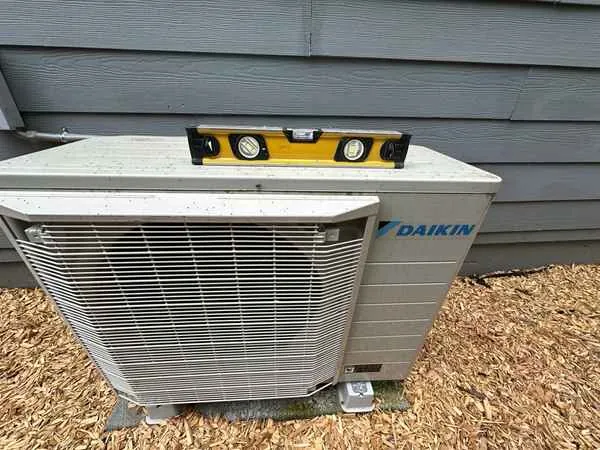
This outdoor unit was not level. A tilted condenser can put extra wear on the compressor and other parts, so it should be reset level. What to check at the HVAC before an offer -
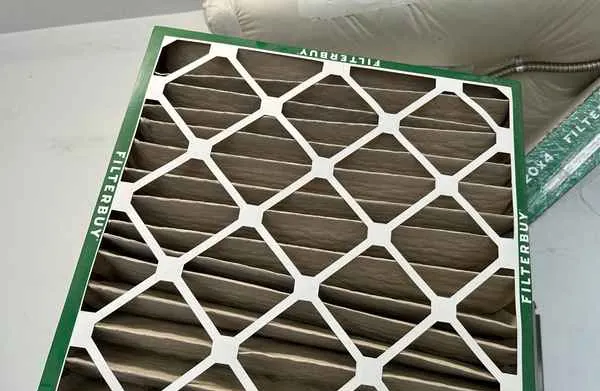
A filter this dirty restricts airflow and makes the system work harder. Filters are cheap and easy to change, and it's one of the simplest fixes. -

Ducts in this crawlspace were not insulated or sealed well. Heated air can lose warmth before it reaches the rooms, which wastes energy. -
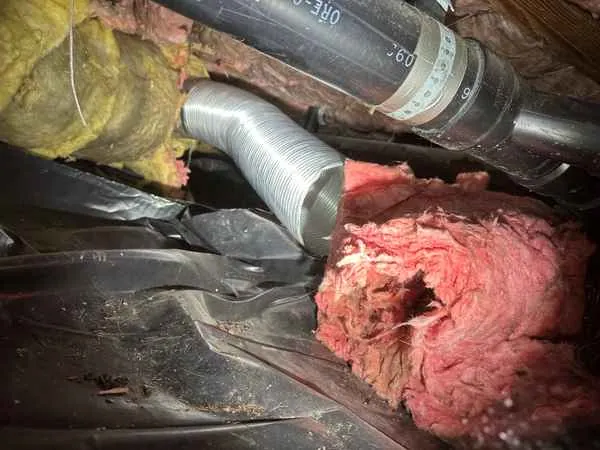
This duct under the kitchen had come apart, so heated air was blowing into the crawlspace instead of the room. A contractor should reconnect it. HVAC findings in Portland area homes
Serial number formats by brand
Most brands have changed how they write serial numbers over the years, so one brand can have several formats. Open a brand to see each one, with a made-up example showing which characters hold the date.
Amana3 formats
Amana serial number lookup and examples
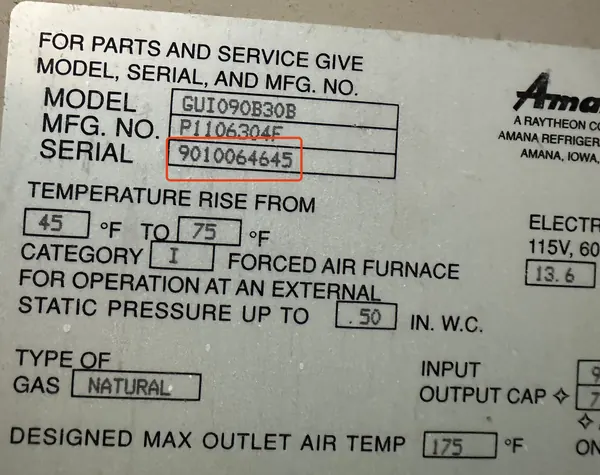
10 digits, all numbers
Example1407123456: Year 14, Month 07, Unit number 123456.
Reads as July 2014. Used from 1970 to today.
9 digits, all numbers
Example980312345: Year 98, Month 03, Unit number 12345.
Reads as March 1998. Used from 1970 to today.
7 digits, often written with a dash after the first 2
Example9812345: Year 98, Unit number 12345.
Reads as 1998. Used from 1970 to 2010.
- This style shows the year only.
American Standard9 formats
American Standard serial number lookup and examples
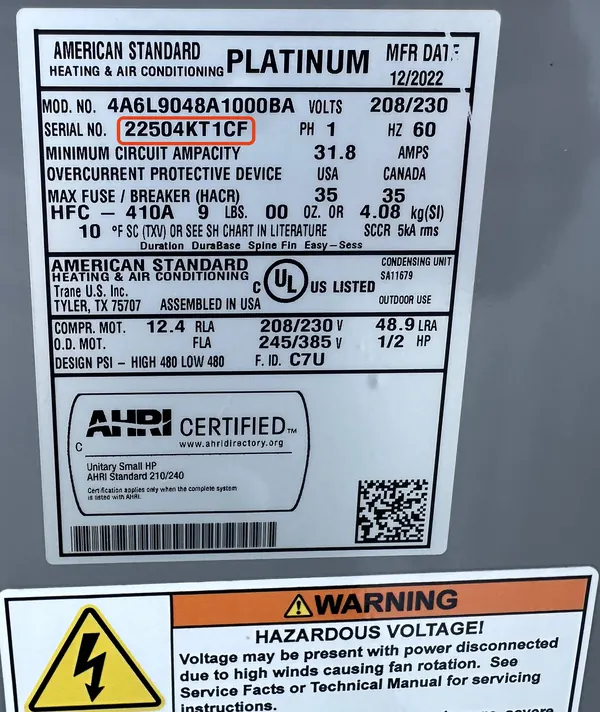
9 characters starting with 3 digits (2002 to 2009)
Example61234ABCD: Year 6, Week 12, Unit number 34ABCD.
Reads as week 12 of 2006. Used from 2002 to 2009.
- Many plates also print a manufacture date.
10 characters starting with 4 digits (2010 and later)
Example18221ABCDE: Year 18, Week 22, Unit number 1ABCDE.
Reads as week 22 of 2018. Used from 2010 to today.
- Many plates also print a manufacture date.
9 characters: a letter, then 2 digits (1983 to 2001)
ExampleK30123456: Year K, Week 30, Unit number 123456.
Reads as week 30 of 1995. Used from 1983 to 2001.
- The first letter stands for the year. The letters are not in alphabet order: S is 1986 and Z is 2001.
9 characters: a letter, 2 digits, a letter, then 5 digits
ExampleA87C12345: Factory A, Year 87, Month C, Unit number 12345.
Reads as March 1987. Used from 1970 to today.
- This looks a lot like the 1983 to 2001 style. If both readings show, check the plate for a printed date or a standards year (ANSI) to pick the right one.
6 digits, then a letter (1980 to 1982)
Example123456T: Unit number 123456, Year T.
Reads as 1981. Used from 1980 to 1982.
A letter, then 6 digits (1980 to 1982)
ExampleC123456: Year C, Unit number 123456.
Reads as 1982. Used from 1980 to 1982.
A digit, a letter, then 4 digits (often with a dash)
Example7B1234: Year 7, Month B, Unit number 1234.
Reads as 1977. Used from 1970 to 1985.
- Only the last digit of the year is in the serial, so the decade is a judgment call. The letter is a month code, but the letter chart for this style is not confirmed, so only the year is shown.
10 characters ending in a letter and 2 digits (1980 to 1982)
ExampleB123456M22: Unit number B123456, Year M, Week 22.
Reads as week 22 of 1981. Used from 1980 to 1982.
8 characters: a letter, 2 digits, then 5 digits (often with a dash)
ExampleD8812345: Month D, Year 88, Unit number 12345.
Reads as April 1988. Used from 1970 to 1999.
Armstrong Air2 formats
Armstrong Air serial number lookup and examples

10 characters: 4 digits, a letter, then 5 digits
Example4612C12345: Factory 46, Year 12, Month C, Unit number 12345.
Reads as March 2012. Used from 1993 to today.
- The first two digits are the factory, not the date.
9 characters ending in 3 letters (1978 to 1992)
Example123456DFB: Unit number 123456, Month D, Year F, Factory B.
Reads as April 1985. Used from 1978 to 1992.
Bryant6 formats
Bryant serial number lookup and examples

10 characters: 4 digits, a letter, then 5 digits
Example2214A12345: Week 22, Year 14, Factory A, Unit number 12345.
Reads as week 22 of 2014. Used from 1980 to today.
- Many plates also print a manufacture date near the serial number.
9 digits, all numbers
Example870612345: Year 87, Month 06, Unit number 12345.
Reads as June 1987. Used from 1970 to 1999.
- Used mostly in the 1980s on Bryant and related units.
8 characters starting with a letter from M to Z, then one digit
ExampleR2A12345: Month R, Year 2, Unit number A12345.
Reads as May 1982. Used from 1980 to 1984.
- Used from 1980 to 1984. The letter is the month and skips O and U.
8 characters starting with one digit, then a letter from M to Z (Canada)
Example2RA12345: Year 2, Month R, Unit number A12345.
Reads as May 1982. Used from 1980 to 1984.
- Canadian-built units put the year digit first and the month letter second.
7 characters: a letter from A to L, then 6 digits
ExampleC512345: Month C, Year 5, Unit number 12345.
Reads as March 1975. Used from 1969 to 1979.
- Used in the 1970s. A 9 in the year spot most likely means 1979, but a few units from 1969 used this style too.
7 to 9 characters: 1 or 2 digits, then a letter
Example31B12345: Week 31, Year B, Unit number 12345.
Reads as week 31 of 1973. Used from 1960 to 1979.
- Used from 1960 to 1979. The letter stands for the year.
Carrier7 formats
Carrier serial number lookup and examples
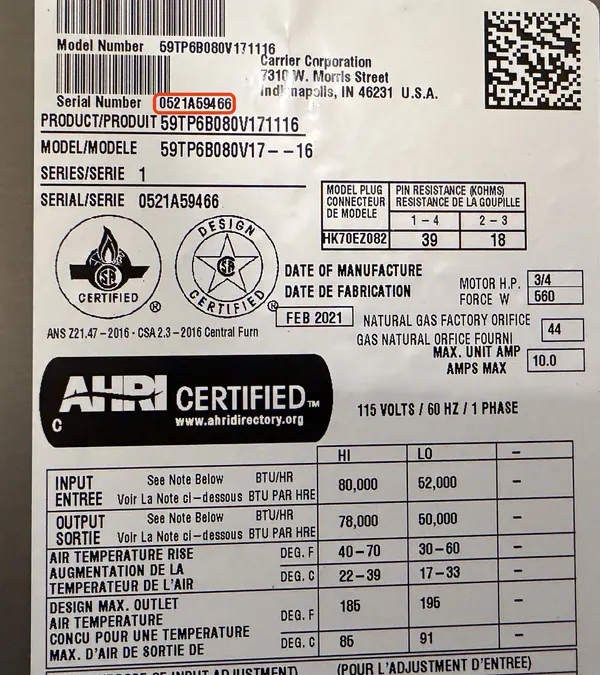
10 characters: 4 digits, a letter, then 5 digits
Example2214A12345: Week 22, Year 14, Factory A, Unit number 12345.
Reads as week 22 of 2014. Used from 1980 to today.
- Many plates also print a manufacture date near the serial number.
9 digits, all numbers
Example870612345: Year 87, Month 06, Unit number 12345.
Reads as June 1987. Used from 1970 to 1999.
- Used mostly in the 1980s on Bryant and related units.
8 characters starting with a letter from M to Z, then one digit
ExampleR2A12345: Month R, Year 2, Unit number A12345.
Reads as May 1982. Used from 1980 to 1984.
- Used from 1980 to 1984. The letter is the month and skips O and U.
8 characters starting with one digit, then a letter from M to Z (Canada)
Example2RA12345: Year 2, Month R, Unit number A12345.
Reads as May 1982. Used from 1980 to 1984.
- Canadian-built units put the year digit first and the month letter second.
7 characters: a letter from A to L, then 6 digits
ExampleC512345: Month C, Year 5, Unit number 12345.
Reads as March 1975. Used from 1969 to 1979.
- Used in the 1970s. A 9 in the year spot most likely means 1979, but a few units from 1969 used this style too.
All numbers, 7 digits (or 5 on Canadian units), made before 1970
Example5123456: Year 5, Unit number 123456.
Reads as 1955 or 1965. Used from 1950 to 1969.
- Only the last digit of the year is in the serial. The decade has to be judged from the unit itself.
7 to 9 characters: 1 or 2 digits, then a letter
Example31B12345: Week 31, Year B, Unit number 12345.
Reads as week 31 of 1973. Used from 1960 to 1979.
- Used from 1960 to 1979. The letter stands for the year.
Coleman4 formats
Coleman serial number lookup and examples

10 characters: a letter, a digit, a letter, then 7 digits (October 2004 and later)
ExampleN1C8123456: Factory N, Year 1, Month C, Year 8, Unit number 123456.
Reads as March 2018. Used from 2004 to today.
- The year is split around the month letter: the 2nd and 4th characters together make the 2-digit year.
10 characters: 4 letters, then 6 digits (1971 to 2004)
ExampleNDGM123456: Factory N, Month D, Year G, Type M, Unit number 123456.
Reads as April 1977 or 1998. Used from 1971 to 2004.
- Letters A through N were used twice, about 21 years apart, so a serial can fit two years. The look of the unit usually settles it.
9 digits, all numbers (1992 to 2004)
Example960412345: Year 96, Month 04, Unit number 12345.
Reads as April 1996. Used from 1992 to 2004.
10 digits, all numbers (before 1992)
Example1185123456: Month 11, Year 85, Unit number 123456.
Reads as November 1985. Used from 1960 to 1991.
- Month comes first in this style.
Daikin3 formats
Daikin serial number lookup and examples
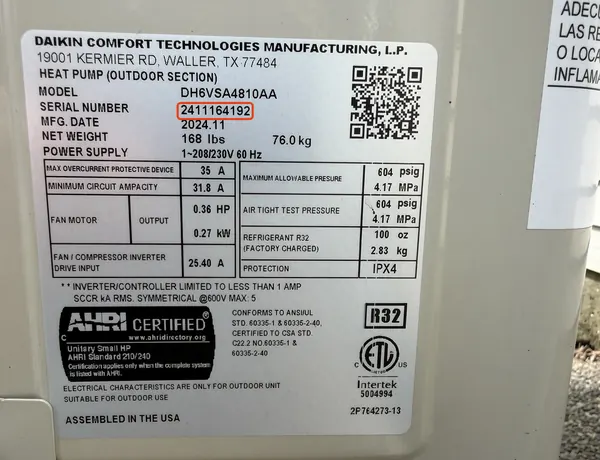
10 digits, all numbers
Example1407123456: Year 14, Month 07, Unit number 123456.
Reads as July 2014. Used from 1970 to today.
4 letters, then digits
ExampleABCD1506123456: Prefix ABCD, Year 15, Month 06, Unit number 123456.
Reads as June 2015. Used from 1990 to today.
14 digits starting with 20 (ductless split units)
Example20520703123456: Year 2052, Week 07, Line 03, Unit number 123456.
Reads as week 7 of 2009. Used from 2000 to today.
- The first 4 digits are a code, not the year itself. 2043 means 2000, 2044 means 2001, and so on.
Some Daikin units, often ductless models, have a short serial with no date in it. Those plates print a manufacture date (MFG DATE). Use that date.
Frigidaire / Nordyne4 formats
Frigidaire serial number lookup and examples
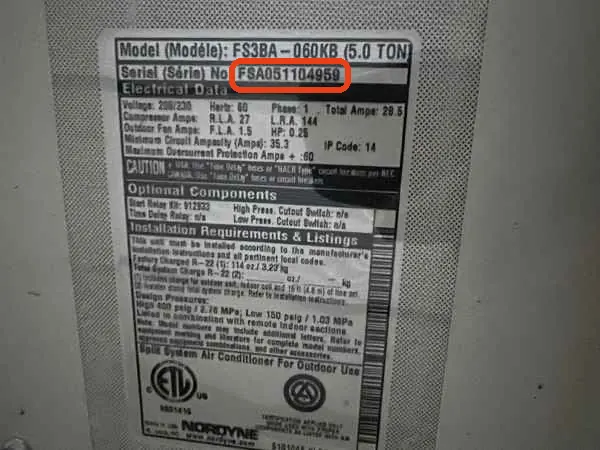
12 characters: 3 letters, then 9 digits (dashes optional)
ExampleABC100412345: Prefix ABC, Year 10, Month 04, Unit number 12345.
Reads as April 2010. Used from 1985 to today.
12 characters: letter, digit, letter, then 9 digits (dash optional)
ExampleA1B081112345: Prefix A1B, Year 08, Month 11, Unit number 12345.
Reads as November 2008. Used from 1985 to today.
5 digits, a dash, 2 digits, then a letter
Example1234502C: Unit number 12345, Year 02, Month C.
Reads as March 2002. Used from 1970 to 2015.
Has a plant letter (F, G, M, N or W) followed by 4 digits
ExampleM171512345: Factory M, Week 17, Year 15.
Reads as week 17 of 2015. Used from 1975 to today.
- The plant letter can sit at the start or in the middle. The 4 digits right after it are the week, then the year.
FujitsuNo date in serial
Fujitsu does not put the manufacture date in the serial number. Check the plate for a printed date. If there is none, Fujitsu customer service can look up the date from the serial number.
Goodman1 format
Goodman serial number lookup and examples

10 digits, all numbers
Example1407123456: Year 14, Month 07, Unit number 123456.
Reads as July 2014. Used from 1970 to today.
Heil2 formats
10 characters: a letter, then 9 digits
ExampleE123312345: Factory E, Year 12, Week 33, Unit number 12345.
Reads as week 33 of 2012. Used from 1985 to today.
- Some plates also print a manufacture date.
Starts with H, then digits (1980s)
ExampleH72612345: Year 7, Week 26, Unit number 12345.
Reads as week 26 of 1987. Used from 1980 to 1989.
- The H stands for the 1980s.
Lennox2 formats
Lennox serial number lookup and examples
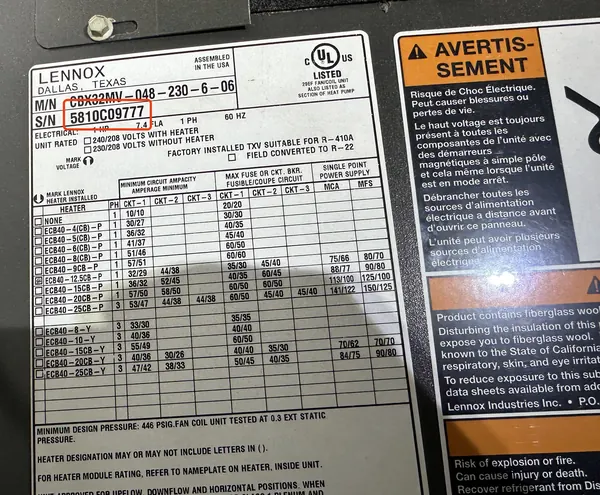
10 characters: 4 digits, a letter, then 5 digits
Example5815E12345: Factory 58, Year 15, Month E, Unit number 12345.
Reads as May 2015. Used from 1973 to today.
- The first two digits are the factory, not the date.
3 or 4 digits only (before 1973)
Example675: Year 67, Month 5.
Reads as May 1967. Used from 1940 to 1972.
Luxaire5 formats
Luxaire serial number lookup and examples
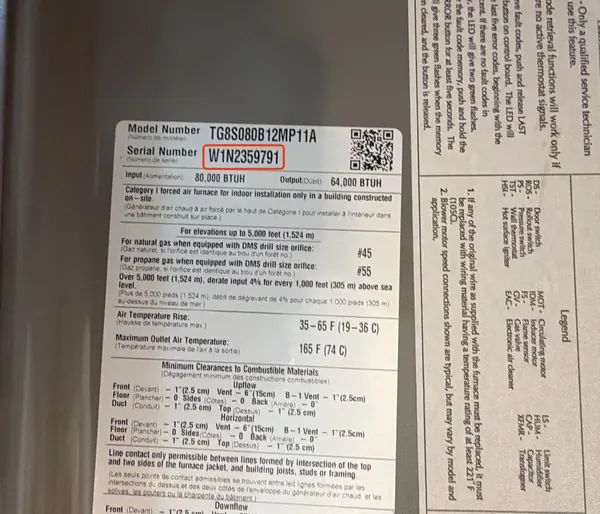
10 characters: a letter, a digit, a letter, then 7 digits (October 2004 and later)
ExampleN1C8123456: Factory N, Year 1, Month C, Year 8, Unit number 123456.
Reads as March 2018. Used from 2004 to today.
- The year is split around the month letter: the 2nd and 4th characters together make the 2-digit year.
10 characters: 4 letters, then 6 digits (1971 to 2004)
ExampleNDGM123456: Factory N, Month D, Year G, Type M, Unit number 123456.
Reads as April 1977 or 1998. Used from 1971 to 2004.
- Letters A through N were used twice, about 21 years apart, so a serial can fit two years. The look of the unit usually settles it.
8 characters: 2 letters, then 6 digits
ExampleCR123456: Month C, Year R, Unit number 123456.
Reads as March 1985. Used from 1971 to 2004.
- Letters A through N were used twice, about 21 years apart, so a serial can fit two years.
8 digits, all numbers
Example95081234: Year 95, Month 08, Unit number 1234.
Reads as August 1995. Used from 1970 to 2010.
10 digits, all numbers (before 1992)
Example1185123456: Month 11, Year 85, Unit number 123456.
Reads as November 1985. Used from 1960 to 1991.
- Month comes first in this style.
Mitsubishi Electric2 formats
Mitsubishi Electric serial number lookup and examples
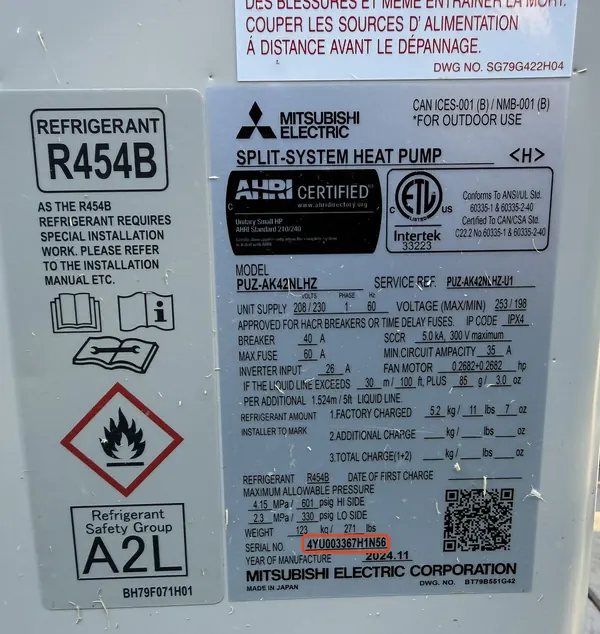
Starts with a digit, then a month code (1 to 9, X, Y or Z)
Example3512345: Year 3, Month 5, Unit number 12345.
Reads as May 2003, 2013 or 2023. Used from 1996 to today.
- Only the last digit of the year is in the serial, so the unit could be from more than one decade. The refrigerant type and the standards year on the plate can help pick the right one.
- Mitsubishi's production year runs April to March. A unit built in January to March can carry the year before.
Ends in the letter T
Example2012345T: Year 2, Unit number 012345.
Reads as 2002, 2012 or 2022. Used from 1996 to today.
- Only the last digit of the year is in the serial, so the decade is a judgment call.
Payne5 formats
Payne serial number lookup and examples

10 characters: 4 digits, a letter, then 5 digits
Example2214A12345: Week 22, Year 14, Factory A, Unit number 12345.
Reads as week 22 of 2014. Used from 1980 to today.
- Many plates also print a manufacture date near the serial number.
9 digits, all numbers
Example870612345: Year 87, Month 06, Unit number 12345.
Reads as June 1987. Used from 1970 to 1999.
- Used mostly in the 1980s on Bryant and related units.
8 characters starting with a letter from M to Z, then one digit
ExampleR2A12345: Month R, Year 2, Unit number A12345.
Reads as May 1982. Used from 1980 to 1984.
- Used from 1980 to 1984. The letter is the month and skips O and U.
7 characters: a letter from A to L, then 6 digits
ExampleC512345: Month C, Year 5, Unit number 12345.
Reads as March 1975. Used from 1969 to 1979.
- Used in the 1970s. A 9 in the year spot most likely means 1979, but a few units from 1969 used this style too.
All numbers, 7 digits (or 5 on Canadian units), made before 1970
Example5123456: Year 5, Unit number 123456.
Reads as 1955 or 1965. Used from 1950 to 1969.
- Only the last digit of the year is in the serial. The decade has to be judged from the unit itself.
Rheem3 formats
Rheem serial number lookup and examples
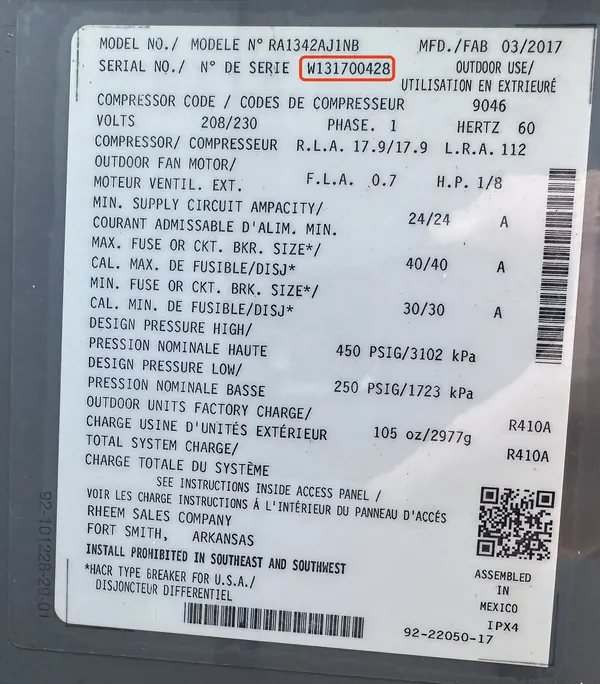
Has a plant letter (F, G, M, N or W) followed by 4 digits
ExampleM171512345: Factory M, Week 17, Year 15.
Reads as week 17 of 2015. Used from 1975 to today.
- The plant letter can sit at the start or in the middle. The 4 digits right after it are the week, then the year.
10 characters: 4 digits, a letter, then 5 digits
Example0695A12345: Month 06, Year 95, Factory A, Unit number 12345.
Reads as June 1995. Used from 1970 to today.
- This style is mostly used on water heaters. Some older heating and cooling units used it too.
9 digits, all numbers (mid 1970s and older)
Example123452268: Unit number 12345, Week 22, Year 68.
Reads as week 22 of 1968. Used from 1950 to 1979.
- The date is at the end: week, then year.
Ruud3 formats
Ruud serial number lookup and examples

Has a plant letter (F, G, M, N or W) followed by 4 digits
ExampleM171512345: Factory M, Week 17, Year 15.
Reads as week 17 of 2015. Used from 1975 to today.
- The plant letter can sit at the start or in the middle. The 4 digits right after it are the week, then the year.
10 characters: 4 digits, a letter, then 5 digits
Example0695A12345: Month 06, Year 95, Factory A, Unit number 12345.
Reads as June 1995. Used from 1970 to today.
- This style is mostly used on water heaters. Some older heating and cooling units used it too.
9 digits, all numbers (mid 1970s and older)
Example123452268: Unit number 12345, Week 22, Year 68.
Reads as week 22 of 1968. Used from 1950 to 1979.
- The date is at the end: week, then year.
Tempstar5 formats
Tempstar serial number lookup and examples
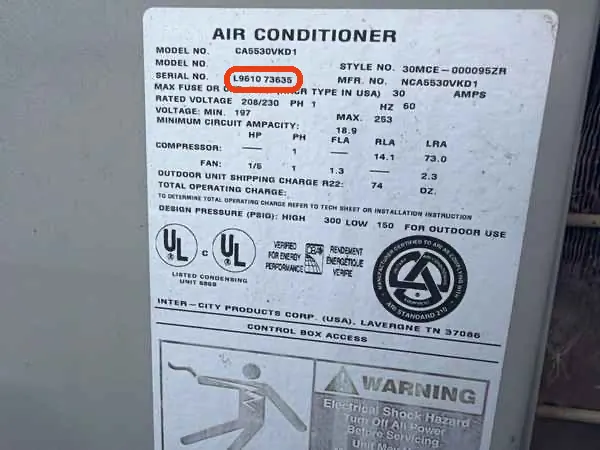
10 characters: a letter, then 9 digits
ExampleE123312345: Factory E, Year 12, Week 33, Unit number 12345.
Reads as week 33 of 2012. Used from 1985 to today.
- Some plates also print a manufacture date.
10 characters: 4 digits, a letter, then 5 digits
Example9733A12345: Year 97, Week 33, Factory A, Unit number 12345.
Reads as week 33 of 1997. Used from 1980 to 2010.
- Same shape as Carrier serials, but read the other way: year first, then week.
8 digits, all numbers (1980 to 1993)
Example61812345: Year 6, Week 18, Unit number 12345.
Reads as week 18 of 1986. Used from 1980 to 1993.
- A first digit of 0 to 3 fits two years, ten years apart.
A letter, a digit, a letter, then 5 more characters (1970 to 1994)
ExampleA2K12345: Year K.
Reads as 1987. Used from 1970 to 1994.
- The third character is a year letter. This style shows the year only.
2 letters, then 5 more characters (1970 to 1994)
ExampleAK12345: Year K.
Reads as 1987. Used from 1970 to 1994.
- The second letter is a year letter. This style shows the year only.
Trane9 formats
Trane serial number lookup and examples

9 characters starting with 3 digits (2002 to 2009)
Example61234ABCD: Year 6, Week 12, Unit number 34ABCD.
Reads as week 12 of 2006. Used from 2002 to 2009.
- Many plates also print a manufacture date.
10 characters starting with 4 digits (2010 and later)
Example18221ABCDE: Year 18, Week 22, Unit number 1ABCDE.
Reads as week 22 of 2018. Used from 2010 to today.
- Many plates also print a manufacture date.
9 characters: a letter, then 2 digits (1983 to 2001)
ExampleK30123456: Year K, Week 30, Unit number 123456.
Reads as week 30 of 1995. Used from 1983 to 2001.
- The first letter stands for the year. The letters are not in alphabet order: S is 1986 and Z is 2001.
9 characters: a letter, 2 digits, a letter, then 5 digits
ExampleA87C12345: Factory A, Year 87, Month C, Unit number 12345.
Reads as March 1987. Used from 1970 to today.
- This looks a lot like the 1983 to 2001 style. If both readings show, check the plate for a printed date or a standards year (ANSI) to pick the right one.
6 digits, then a letter (1980 to 1982)
Example123456T: Unit number 123456, Year T.
Reads as 1981. Used from 1980 to 1982.
A letter, then 6 digits (1980 to 1982)
ExampleC123456: Year C, Unit number 123456.
Reads as 1982. Used from 1980 to 1982.
A digit, a letter, then 4 digits (often with a dash)
Example7B1234: Year 7, Month B, Unit number 1234.
Reads as 1977. Used from 1970 to 1985.
- Only the last digit of the year is in the serial, so the decade is a judgment call. The letter is a month code, but the letter chart for this style is not confirmed, so only the year is shown.
10 characters ending in a letter and 2 digits (1980 to 1982)
ExampleB123456M22: Unit number B123456, Year M, Week 22.
Reads as week 22 of 1981. Used from 1980 to 1982.
8 characters: a letter, 2 digits, then 5 digits (often with a dash)
ExampleD8812345: Month D, Year 88, Unit number 12345.
Reads as April 1988. Used from 1970 to 1999.
York2 formats
York serial number lookup and examples
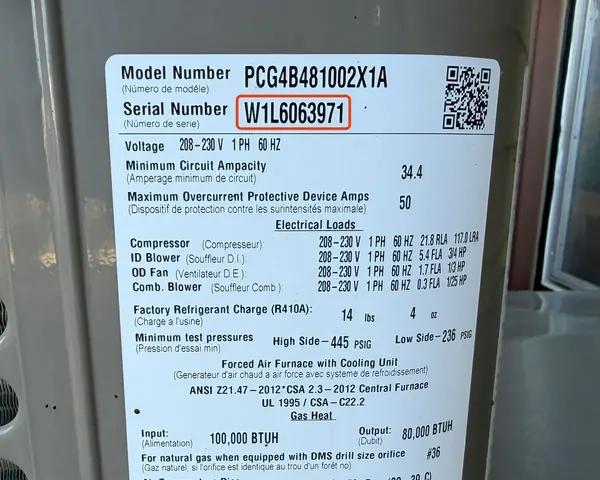
10 characters: a letter, a digit, a letter, then 7 digits (October 2004 and later)
ExampleN1C8123456: Factory N, Year 1, Month C, Year 8, Unit number 123456.
Reads as March 2018. Used from 2004 to today.
- The year is split around the month letter: the 2nd and 4th characters together make the 2-digit year.
10 characters: 4 letters, then 6 digits (1971 to 2004)
ExampleNDGM123456: Factory N, Month D, Year G, Type M, Unit number 123456.
Reads as April 1977 or 1998. Used from 1971 to 2004.
- Letters A through N were used twice, about 21 years apart, so a serial can fit two years. The look of the unit usually settles it.
Questions about reading HVAC serial numbers
Why did I get more than one date?
Some brands reused the same letter codes about 20 years apart, and some serials hold only the last digit of the year. When a serial fits more than one date, the decoder shows all of them instead of guessing. The look of the unit, the refrigerant type on the plate, or a printed date usually settles it.
The decoder says no match. What now?
First check that you typed the serial number, not the model number. Then look for characters that are easy to mix up, like the letter O and a zero, or the letter I and a one. Some units, including Fujitsu and some Daikin models, do not put the date in the serial at all. If the plate has no printed date, the manufacturer's customer service line can usually look it up from the serial number.
Is the date the unit was made the same as the date it was installed?
Not always. A unit can sit in storage for a while before it goes in. Install paperwork, a service sticker from the installing company, or permit records for the address can show when it was put in.
How accurate is the decoder?
The accuracy of the results is not guaranteed. The rules come from how each brand has coded dates over the years, and every format is checked against sample serials. Manufacturers do change formats, though, and a few old formats are only partly known. A date printed on the plate always wins, and the manufacturer can confirm the date from the serial number.
Does it work for water heaters?
Not this one. Water heater serials follow their own rules. Use the water heater serial number decoder for tank, tankless and heat pump water heaters. This decoder covers furnaces, air conditioners, heat pumps, air handlers and ductless units from 20 brands.
Buying a home in the Portland area?
A home inspection covers the heating and cooling equipment along with the rest of the house, including its approximate age and visible condition. Serving the Portland metro and Southwest Washington, seven days a week.