New Construction Home Inspection by a Certified Master Inspector®
Code inspectors check boxes at framing, rough-in, and final. They don't walk the finished home. Across Portland Metro and SW Washington, Russ Motyko brings work as a licensed general contractor and a Certified Master Inspector® credential to every new build. He looks where the builder hopes you won't.

- Timing
- Before closing on a new build
- Price
- From $395, by home size
- Included
- Thermal imaging
- Report
- Same day

Inspection by a licensed builder
I'm a licensed general contractor. I've framed walls, set trusses, run wiring, replaced ducts, hung drywall, set tile, and flashed windows. I've also walked into a finished build on inspection day and filled pages with problems.
That background changes what gets caught. When I see a flashing detail at a window head, I know how it should have been layered. When I open a panel, I know what a clean termination looks like and what a rushed one looks like. When I find a duct that wasn't sealed, I know how these problems tend to get fixed, and what happens when they don't.
New construction across Happy Valley, Hillsboro, Ridgefield, and Camas shares the same patterns. The same crews work the same subdivisions, and the same details get rushed on Friday afternoon. So I have a short list of places I check first, and it is usually productive.
I hold Certified Master Inspector® certification, Oregon OCHI license #1898, and Washington DOL license #1856. Free thermal imaging on every inspection.
City code inspection vs. home inspection
A city code inspection and an independent home inspection are two different things doing two different jobs. If you're buying new, the difference matters more than anything else on this page.
| What It Covers | City Code Inspection | Independent Home Inspection |
|---|---|---|
| Who orders it | City or county jurisdiction | You, the buyer |
| Who it serves | Public safety, code compliance | Your interests only |
| When it happens | Specific phases during the build | At or near completion |
| Scope | Pass/fail against minimum code | Finished home, all accessible systems |
| Catches work done between phases | No | Yes, where visible |
| Checks how installed systems perform | No | Yes |
| Thermal imaging included | No | Yes, no extra charge |
| Written report for your records | No | Yes, digital with photos and video |
| Useful for warranty claims | No | Yes |
The bottom line. Code compliance means the home met the minimum legal bar at the moment the city inspector showed up. It doesn't mean every system was installed right. It doesn't account for work done between visits. And it isn't yours to keep. An independent inspection gives you a clear picture of the visible condition of the house you're about to buy. For a deeper look at what gets covered, see our buyer's home inspection page.
Common new construction defects
These are the findings that come up again and again on new builds across Portland and SW Washington. A few are small. Others get expensive the moment the builder's warranty runs out.
Flashing defects
Missing or wrong-order flashing at roof transitions, windows, and doors. The most common finding overall. Water damage from bad flashing can take a year or more to show up, well past any urgent repair conversation.
Grading and drainage
Fresh dirt around new builds is often left sloping toward the foundation, not away from it. In our wet climate, that pushes water into crawlspaces and against foundation walls. Cheap to fix now. Painful to fix after landscaping is in.
HVAC install errors
Unsealed ductwork. Disconnected exhaust runs. Refrigerant lines run sloppy. These hit your comfort and your power bill from day one. Code inspectors check rough-in, not the finished system.
Attic and insulation
Insulation pulled apart, gapped, or compressed. Bath fans dumping moist air into the attic instead of outside. Missing vapor barrier. Thermal imaging can help spot insulation gaps a flashlight would miss.
Plumbing install errors
Missing water heater straps. Pipes hanging without support. Drain slope that won't actually drain. Some of these are minor. Some will leak inside a wall a year from now.
Electrical defects
Open junction boxes. Missing cover plates. Bonding gaps. GFCI protection missing in wet areas. These are safety items worth raising with the builder before you take ownership.
Structural issues
Foundation cracks, anchor bolts that aren't tied in, framing that's out of square. Less common than the items above. Most important to catch while the warranty is still good.
Radon
Clark County, WA sits in EPA Radon Zone 1, and elevated readings turn up across the Portland metro. New construction doesn't change the geology under the slab. Add radon testing for $150 with your inspection.
Why flashing order matters
- Every upper layer overlaps the one below it, like shingles on a roof.
- The housewrap above laps over the flashing’s upturned leg.
- Water that gets behind the siding rides the flashing back outside.
- The flashing sits on top of the housewrap instead of under it.
- Water running down the wrap slips behind the flashing.
- It reaches the window head and framing, where it can go unseen for a year or more.
Found on recent new-construction inspections
Real photos from Russ's new-build reports. Brand new homes still get punch-list items worth fixing before closing or the warranty ends.
-
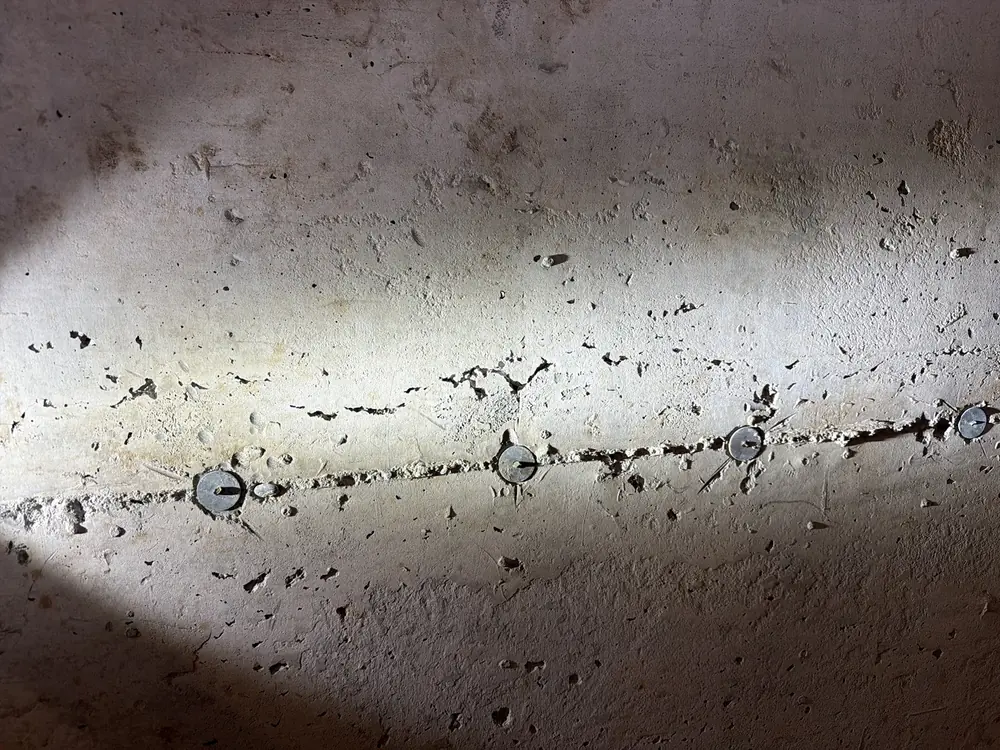
Honeycombing in a new foundation wall, where the concrete didn't fully fill the form. Worth sealing and having the builder review. -
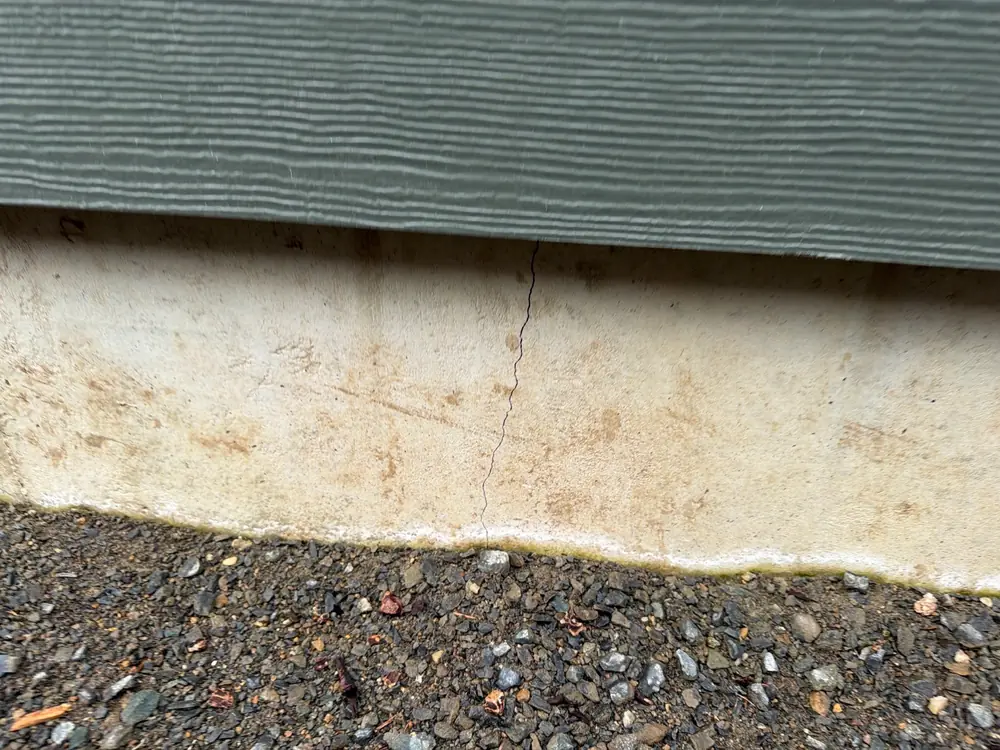
A small crack in a new foundation. Common as concrete cures, and sealing it early helps keep water out. When foundation cracks are a concern -
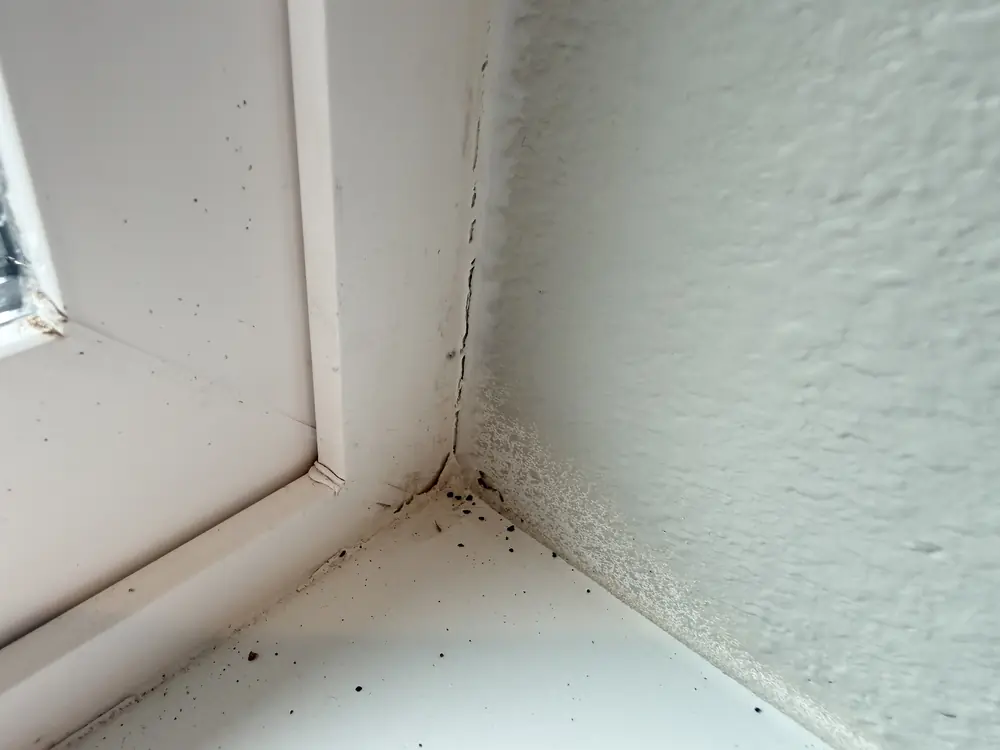
Cracked sealant where a window frame meets drywall. Normal shrinkage in a new home, and an easy warranty-list item. -
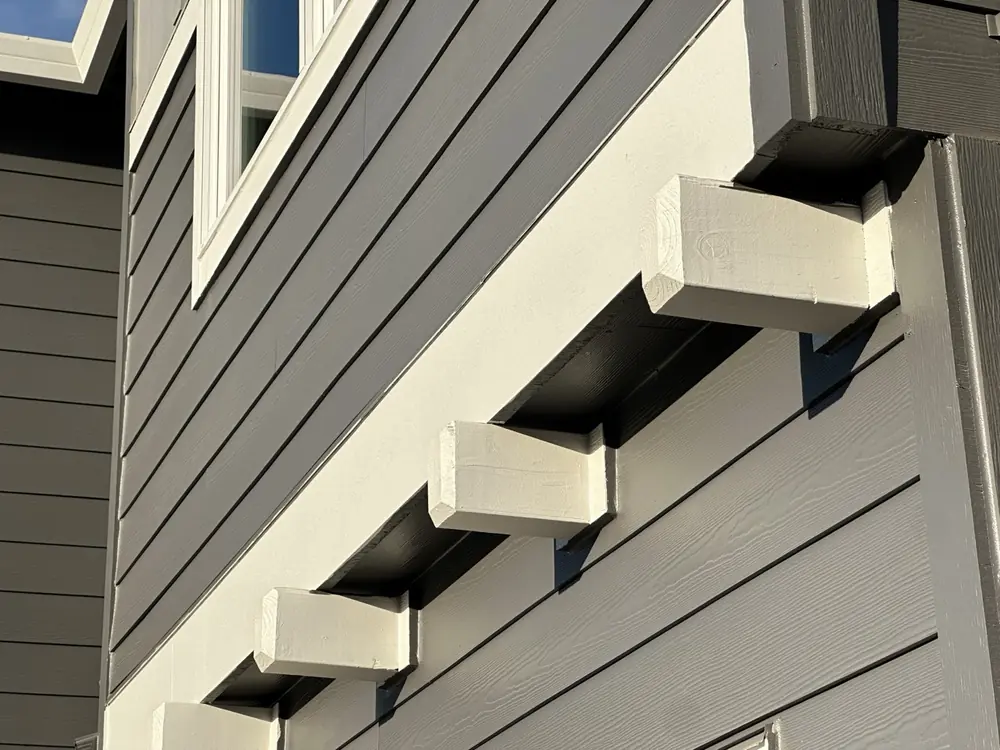
Horizontal trim needs flashing above it to shed water. Without it, water can sit on the trim and work behind it, which can lead to rot. Fiber cement siding installation mistakes -
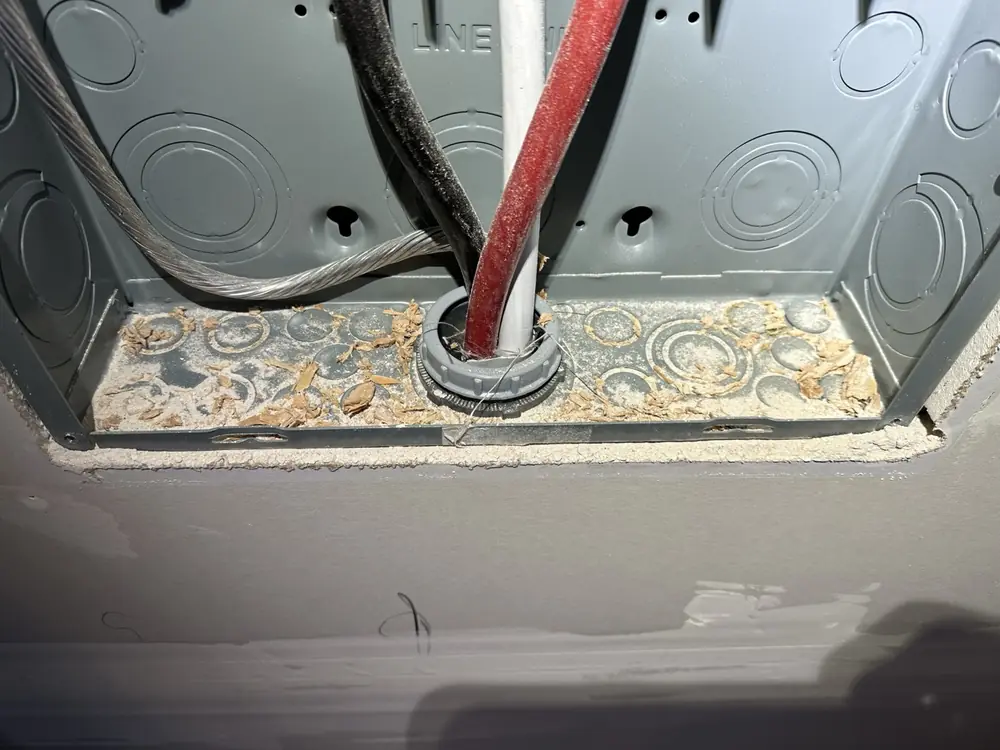
A new panel should be delivered clean. Debris inside the enclosure can interfere with breakers, so the builder's electrician should clean it out. What to look for at the electrical panel -
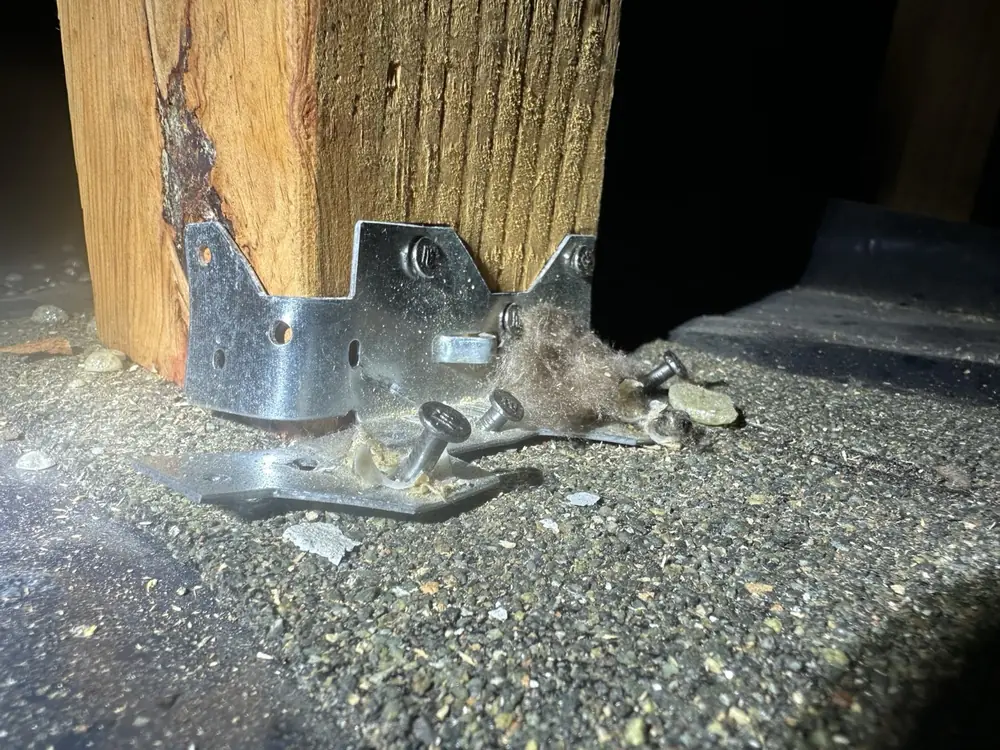
These post brackets were held with ordinary nails, some loose enough to pull by hand. A contractor should reinstall them with proper concrete fasteners. What inspectors look for at support posts
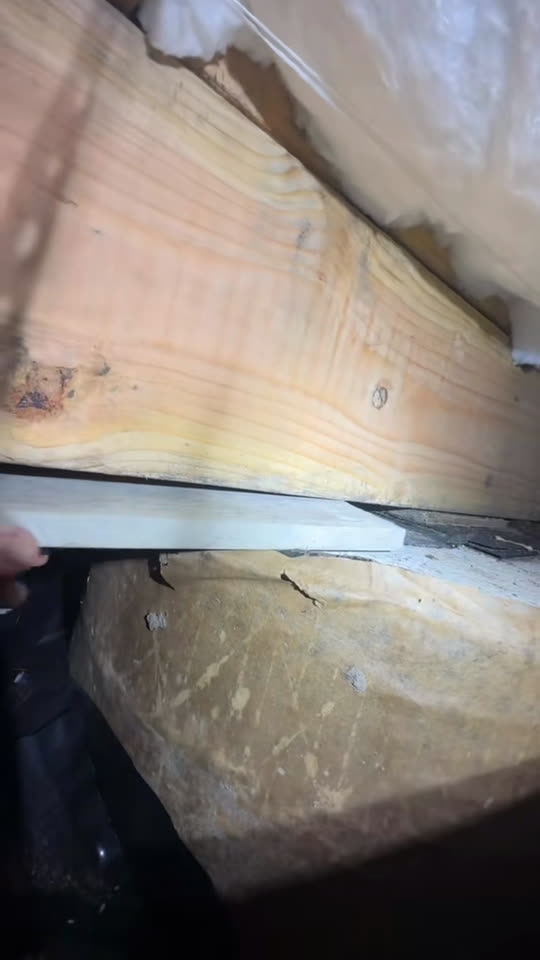
New construction inspection video
A real inspection of a brand-new home in Vancouver, Washington. Listed at $445,000. 1,400 sq ft. "Quality finishes throughout." Here's what comes up in under five minutes when a Certified Master Inspector with a contractor background walks the place.
A $445,000 brand-new home. Findings like these are normally the builder's to correct before closing, and getting them corrected starts with having them written down.
Check pricing & availabilityA builder walkthrough is not an inspection
Most builders schedule a pre-closing orientation walkthrough. It's run by a builder's rep, not an independent inspector. The job is to show you how the home works and write down a few cosmetic punch list items. The builder controls what makes the list.
The person running it isn't trained to evaluate whether your home was built correctly. Their job is to help you take the keys to a home that's already been sold. No amount of friendly chat changes the fact that they work for the builder.
An independent inspection puts a licensed inspector in the house who works only for you, with one job: look for problems and write them down before you sign. Same house, walked by someone with no interest in how smoothly the handover goes.
Builder walkthrough vs. independent inspection
Builder walkthrough: Run by a builder employee. Their job is a smooth handover, not a critical look at the home.
Independent inspection: Run by a licensed inspector you hired. The only job is to look for problems in the home.
Builder walkthrough: Cosmetic punch list. Structural, mechanical, and install issues are not the focus and often go unmentioned.
Independent inspection: Every accessible system. Roof, crawlspace, attic, electrical, plumbing, HVAC, and site conditions. Plus free thermal imaging.
Builder walkthrough: No written report. No photos of defects. Nothing you can use later for a warranty claim.
Independent inspection: Full digital report. High-res photos, severity ratings, plain-language notes. Useful for the life of your ownership.
A report for your builder
On a new build, your report is the document you hand the builder when requesting repairs before closing, and the record you keep for warranty claims down the road. Here's what every new construction report includes.
Plain-language findings
Written for a homeowner, not a contractor. You'll know what each item means and why it matters before you hand the report to your builder.
Photos and video on every finding
Documentation of each defect noted, in context, with the photo attached to the finding. Easy to forward to a builder rep or a project manager.
Severity-rated items
Safety hazards, major defects, maintenance items, and informational notes. Sorted so the serious findings are not buried among the small ones.
See a real report
Browse a full sample inspection report. This is exactly what you'll get after your inspection, with the same format and same level of detail.

What clients say
5.0 on Google from 38 reviews, as of October 2026. 5.0 on Yelp.
“Russ is an outstanding inspector. Extremely thorough and very knowledgeable. He will crawl where others won't, and will see what others are blind to. Would 100% recommend his company to EVERYONE.”
“Russ was very detailed and found out way more details that were missed by other inspectors. He is very knowledgeable and detail oriented! Will definitely go with him next time I need an inspection.”
“Russ came recommended by our agent, and it's easy to see why. Compared to friends who recently bought homes and used other inspection companies, the level of detail here was unmatched. We have no complaints and would absolutely work with them again.”
Flat-rate pricing
Starts at $395
- Full home inspection, roof to crawlspace
- Thermal imaging included
- Same-day digital report
Over 7,500 sq ft? Call (971) 202-1311. Full price list
Starts at $295
- Interior-only inspection: electrical, plumbing, HVAC
- Thermal imaging included
- Same-day digital report
Over 3,500 sq ft? Call (971) 202-1311. Full price list
With a home inspection $150
- Homes over 6,000 sq ft
- $225
- On its own
- $225
- Test length
- 48 hours
With a home inspection $245
- Homes over 3,500 sq ft
- $315
- Homes over 5,500 sq ft
- $385
- Includes
- 2 air samples + 1 control
- Lab analysis and report
- Included
- On its own
- $445
With a home inspection $295
- On its own
- $395
- In-ground spa
- Included
- Free-standing hot tubs
- Not inspected
Save $50 with code NEWCONSTRUCTION when you book.
New construction FAQs
Questions buyers ask most often before booking a new build inspection across Portland and SW Washington. Have a different one? Call (971) 202-1311. Russ answers his own phone.
Serving Portland and Southwest Washington
Seven days a week, within 40 miles of Oregon City, no travel fee. Farther out? Call to ask about the travel fee and availability.
Schedule your new construction inspection
Serving Portland Metro & SW Washington, seven days a week. Use code NEWCONSTRUCTION at checkout for $50 off. Military and first responders: 10% off the inspection fee with MILITARY10 or RESPOND10.