Portland, OR • Pool & Spa Inspection

Buying a Portland Home With a Pool? Inspect the Pool Too.

Your home inspector will not look at the pool. Not the shell. Not the pump. Not the wiring. Pools sit outside the standard scope. A dedicated pool inspection looks at every system on your behalf, before you own it. Shell, equipment, electrical, plumbing, safety barriers, deck. If something is wrong, you find out now, not in May with a fresh leak.

$245 added to your home inspection
In-ground spas included
Licensed in Oregon and Washington
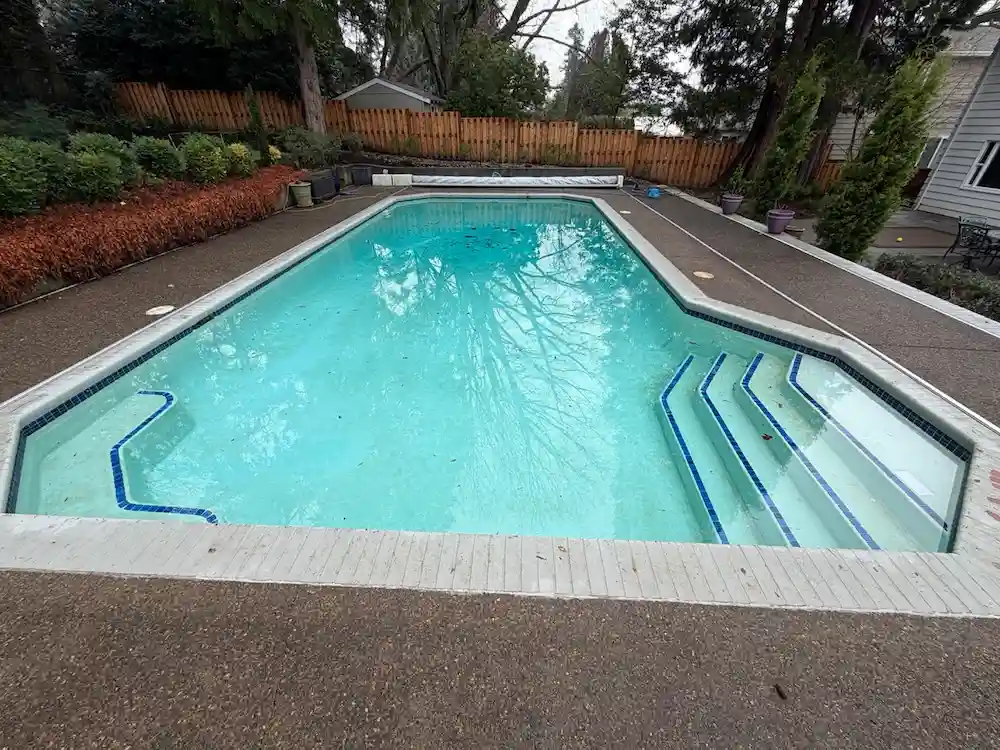
Certified Master Inspector performing a pool inspection on a residential pool in Portland, Oregon
CMI® — OR #1898 · WA #1856
Full electrical safety check
Digital report with photos
Add-on or standalone
Available 7 days a week

I Know What Goes Wrong With Portland Pools.

Pool inspection in Portland, Oregon
Portland, OR

I have been inspecting pools for 8 years. Most of that work has been right here in Portland and the surrounding metro. The patterns repeat. Pumps cracked from a freeze the seller never mentioned. Old flat drains that have not been legal since 2007. Bonding that was never done at install and never noticed since. I have seen all of it, on every kind of pool this market has.

I have written guides on pool inspections. Buyers, agents, and other inspectors read them to understand what a real evaluation looks like. If you want a primer before your inspection, start with what a pool inspection actually covers or the Portland pool inspection guide.

I have also trained other inspectors on how to inspect pools. Walking another professional through a pool teaches you what is easy to miss. That experience comes with you on every job. The plaster you would have walked past. The bonding lug that looks fine but is not connected to anything. The heater that fires for 30 seconds and then quits.

I hold Certified Master Inspector® certification (top 3% of the industry), Oregon OCHI license #1898, and Washington DOL license #1856.

Your Home Inspector Will Not Inspect Your Pool

Home inspector standards of practice, both InterNACHI and ASHI, leave pools and spas out of the standard inspection. So if you do not add a pool inspection, the pump, the heater, the bonding, the safety barriers, the drain covers, and the shell are all unknowns at closing. Every one of them.

That matters because pool repairs are not small. Plaster resurfacing runs $5,000 to $15,000. A failed heater is $1,500 to $3,500. Electrical fixes that affect insurance can cost more than that and show up at the worst possible moment. See typical Portland pool inspection costs and what you actually get.

Knowing about these items before you close means you negotiate. Finding out after means you pay. That is the entire point of a separate pool inspection.

Insurance carriers in Portland are looking harder at pool safety than they used to. Bonding, GFCI, and barrier issues found after closing can hold up your homeowner's policy until they get fixed.
What pool repairs cost when found after closing
Plaster resurfacing
$5,000 – $15,000
Standard to pebble finish, depending on pool size
Gas or heat pump heater
$1,500 – $5,500
Replacement cost depending on type
Electrical corrections
$300 – $2,500+
GFCI, bonding, subpanel, and wiring
Full deck replacement
$8,000 – $25,000
Concrete or pavers around the pool

Every System. Every Component. Documented.

The pool needs to be filled and the equipment running for a full inspection. Here is what gets checked in each area.

Shell & Structure

The shell is the most expensive part of the pool to fix. Cracks in concrete or gunite can mean ground movement, bad construction, or freeze damage. Surface condition tells you how close the plaster is to needing a $10,000 redo.

Most Portland pools sit dormant through the wet season. Saturated soil and a frost event or two can speed up cracking and delamination, especially on a pool that was not properly drained. More on the structural problems that show up in Portland pools.

What I evaluate
Shell surface: cracks, delamination, spalling
Interior finish: plaster, chalking, staining, exposed aggregate
Vinyl liner: tears, lifting, seam integrity
Coping and bond beam: cracks, displacement, mortar
Tile: cracking, missing pieces, grout
Settling or ground movement affecting the shell

Mechanical Equipment

Pool equipment has a lifespan. Pumps run 8 to 12 years. Heaters 10 to 15. Equipment that sat through a Portland winter without being blown out is the most common cause of failure I see. A buyer's guide to reading pool equipment age.

I run every piece of equipment during the inspection. Pump runs but flow is low. Heater fires but loses temperature. Salt cell shows an error. All of that goes in the report, with what it likely means and a real cost range to fix it.

What I evaluate
Pump: operation, flow, noise, seals, age
Filter: type (sand, cartridge, DE), condition, function
Heater: operation, burner or element, controls
Salt system or chemical feeder operation
Automatic cleaner: type and operation
Timers, controllers, and automation

Electrical Systems

Pool electrical is the most dangerous part of any home inspection. Electric shock drowning, equipment fires, severe injury. All real risks when pool wiring is wrong. GFCI and equipotential bonding are the two big ones. A buyer's guide to pool electrical safety.

Missing GFCI on the pump and lighting circuits is a top finding in older Portland pools. Bad bonding is less obvious and just as serious. Insurance carriers may refuse to write or renew a policy with documented pool electrical issues. More on what pool bonding actually is and why it matters.

What I evaluate
GFCI: pump, lighting, all required circuits
Equipotential bonding of all metal components
Subpanel: condition, labeling, breaker operation
Underwater lighting fixtures and junction boxes
Deck-mounted lighting and conduit
Overhead line clearances from the pool

Plumbing

Pool plumbing leaks usually go undetected for a long time because the lines are buried. By the time you see water loss, soil erosion at the equipment pad, or staining around fittings, the damage has been building for months.

The main drain anti-entrapment cover is required by federal law. VGB-compliant drain covers must be on every pool and spa. Plenty of older Portland pools still have original flat drains. That is a safety issue and an insurance issue at the same time.

What I evaluate
Main drain: VGB anti-entrapment cover compliance
Return lines and jets: condition and flow
Skimmer baskets and weirs
Equipment pad visible plumbing: leaks, condition
Backwash line routing
Water fill line and shut-off

Safety & Barrier Compliance

Oregon and Washington both have pool safety rules covering fence height, gap dimensions, gate hardware, and door alarms on house doors that lead to the pool. Older pools were built under different rules, or no rules at all, and most do not meet current code. Read the current Oregon pool safety requirements.

Safety problems affect your insurance, your liability if a kid wanders in, and in some cases your ability to close. Spotting them now means you negotiate the fix into the contract instead of paying for it yourself in July.

What I evaluate
Perimeter fence: height, gap width, structural condition
Gate hardware: self-closing, self-latching
Door alarms on direct-access house doors
Depth markings and no-diving indicators
Pool cover condition and operation
Rescue equipment visibility and access

Decking & Surrounds

Pool decks in Portland take a beating. Frost heaving. Tree root intrusion. The wet-dry cycle of our climate. Raised slab edges and uneven surfaces are fall hazards and one of the most common findings on mature properties.

Diving boards and slides get checked for condition, attachment, and whether the pool depth is safe for the equipment that is bolted to it. These are liability items. They have to be documented accurately if the report is going to be used in a negotiation.

What I evaluate
Deck surface: cracks, heaving, trip hazards
Drainage: slope and standing water
Steps and handrails: condition and attachment
Diving board or slide condition and attachment
Attached spa or water feature connections
Roots or soil movement affecting the structure

What Makes Portland Pools Different to Inspect

Local climate, soils, and a long dormant season create specific pool risks that show up here and would not show up in San Diego.

Winter Dormancy and Freeze Damage

Most Portland pools sit dormant through the wet season. Pools that were not properly winterized first are exposed to freeze events that crack pump housings, filter tanks, heater heat exchangers, and buried plumbing. This is the single most common source of equipment failure I see on local purchases. More on properly winterizing a Portland pool.

Soil Movement and Foundation Stress

Portland's clay-heavy soils swell when wet and shrink when dry. That movement puts steady stress on pool shells, deck slabs, and retaining walls. Pools on hillside lots take it the worst. A small crack in the deck or shell often traces back to soil movement that is not done yet.

Older Pools and Code Gaps

A lot of Portland pools were built in the 1970s through 1990s, under rules that no longer apply. Federal VGB anti-entrapment requirements became law in 2007. State barrier rules have been updated since. A pre-2007 pool that was never updated is the norm, not the exception, and the safety hardware affects your insurance regardless of when the pool went in.

The Most Common Pool Inspection Findings in Portland

These show up often enough that every Portland pool buyer should know about them before booking. Full breakdown of the most common pool problems.

Non-Compliant Anti-Entrapment Drain Covers

Safety

Federal law requires VGB-compliant drain covers on every pool. Most older Portland pools still have the original flat drains. That is a suction entrapment hazard, a liability issue, and an insurance problem. First thing I check on every pool.

Repair cost: $150 to $400

Missing GFCI Protection

Safety

Older pools often have no GFCI on the pump motor or underwater lighting. Real shock hazard. Real code problem. Insurance carriers flag it more and more as a condition of coverage. I test every GFCI location and every pool circuit.

Repair cost: $150 to $350 per circuit

Deteriorated Interior Surface

High Cost

Plaster lasts 10 to 15 years. Chalking, crazing, rough texture, staining, exposed aggregate. All signs the surface is at or past end of life. Resurfacing is one of the biggest expenses you can inherit from a pool, and most sellers do not disclose it because they have stopped noticing.

Repair cost: $5,000 to $15,000+

Freeze-Damaged Equipment

Common

Portland pools that sat through winter without proper winterization are prone to freeze damage inside pumps, filter tanks, and heater heat exchangers. Not always visible until the equipment runs. I run all of it during the inspection and document any freeze damage, internal cracking, or weak operation.

Repair cost: $600 to $5,500

Safety Barrier Non-Compliance

Safety

Oregon and Washington both have specific rules for fence height, gap dimensions, gate hardware, and door alarms. Older installs often have the wrong gate latch, fence sections that are too short, or gaps that miss the current minimum. This affects insurance and creates real legal exposure.

Repair cost: $100 to $3,000+

Deck Settlement and Trip Hazards

Common

Concrete pool decks in Portland get hit by frost heaving, tree roots, and the seasonal swelling of clay soil. Raised slab edges around the pool are a fall hazard and a steady finding on older properties. Deck damage also speeds up water intrusion toward the shell.

Repair cost: $500 to $25,000

What Pool Repairs Actually Cost in Portland

Findings only help if you know what they cost to fix. These ranges reflect real Portland contractor pricing.

Repair Item Typical Portland Cost
Mechanical Equipment
Pool pump replacement$600 – $1,800
Filter replacement or rebuild$300 – $1,200
Gas heater replacement$1,500 – $3,500
Heat pump replacement$2,500 – $5,500
Electrical
VGB-compliant drain cover replacement$150 – $400
GFCI breaker installation (per circuit)$150 – $350
Bonding correction (varies by scope)$400 – $2,000
Shell and Surface
Plaster resurfacing (standard)$5,000 – $10,000
Pebble or quartz resurfacing$8,000 – $18,000
Decking and Barriers
Deck repair (per section)$500 – $3,000
Full deck replacement$8,000 – $25,000
Fence gate hardware correction$100 – $400
New pool fence (per linear foot)$25 – $80
Using findings in negotiation: Pool inspection findings totaling more than $2,000 in repairs are usually negotiable as a credit or repair request. A written report from a licensed inspector is the documentation your agent needs to make that ask.

Add-On or Standalone. Same Inspection.

The smart play is adding the pool inspection to your Portland home inspection. One visit, one coordinated report, $100 less than booking it on its own.

Portland Pool Inspection

Same scope. Same report. The only difference is timing.

Add-on to home inspection
$245
Save $100. Most buyers pick this.
Standalone
$345
Already own a home, or buying without a full inspection.
Included on every inspection
  • Shell, structure, and interior surface
  • All mechanical equipment operated
  • Full electrical safety check
  • Plumbing, drains, and skimmers
  • Safety barriers and deck
  • Attached in-ground spa included
  • Digital Spectora report with photos
  • Unlimited follow-up after delivery

Veteran owned. 10% military discount for veterans, active duty, reservists, National Guard, and military families.

Schedule Your Pool Inspection →

See a Real Pool Inspection Report

Before you book, see exactly what your report will look like. Real findings, real photos, real severity ratings. Same Spectora format your agent and lender will get.

What people say about Russ

Real reviews from clients across Portland Metro & SW Washington.

Pool Inspection FAQs

Questions I hear most often from Portland buyers. More on the main FAQ page.

No. Both InterNACHI and ASHI standards leave pools and spas out of a standard home inspection. Without a dedicated pool inspection, you get nothing on the shell, equipment, electrical, plumbing, or barriers. Adding it on is the only way to know what you are buying. Do I really need one?
$245 added to a home inspection. $345 standalone. In-ground spas attached to the pool are included. Booking it with your Portland home inspection is always the cheapest path. Full pricing breakdown.
The pool needs to be filled and the equipment running. An empty pool or winterized equipment means certain components cannot be properly checked. If the pool is drained at the time of inspection, I document what I could and could not access, and a re-inspection after startup may make sense. If you are buying in the off-season, talk to your agent about a startup inspection before closing.
Yes. Attached in-ground spas come with the pool inspection at no extra charge. Freestanding portable hot tubs can also be added. If the property has both a pool and a separate spa, mention both when you book so I can plan the time. More on hot tub and spa inspections in Portland.
A recent renovation is good to know but does not replace an inspection. I verify the work was done right, that permits were pulled where required, and that the renovation actually brought the pool up to current safety standards. Unpermitted pool work creates disclosure problems on resale.
Yes. Above-ground pools get a liner check, frame structure review, plumbing and electrical safety. The scope is narrower than an in-ground inspection because the construction is different, but the equipment and safety checks are the same. More on above-ground pool inspections.
Yes. Pool inspections cover Vancouver, Camas, Battle Ground, Ridgefield, and Washougal, plus the full Portland metro on the Oregon side. Active in both Oregon (OCHI #1898) and Washington (DOL #1856), 7 days a week. Book online.
Yes, especially in Clackamas County (EPA Zone 1). Radon has nothing to do with the pool, but adding radon testing ($150) at the same time means one visit covers everything. The 48-hour test starts the same day. No second trip.
A pool changes the math on insurance, ongoing maintenance, and the size of the surprise repair bill you might inherit. A buyer's guide to homes with pools in Portland covers what to think about before you write the offer.
Call or text. Unlimited follow-up is part of every inspection. If you need help understanding a finding, want a real number on a repair, or are trying to decide whether something is a dealbreaker, I am available by phone after the inspection. You are never handed a report and left alone with it.

Know What You Are Buying Before You Own It.

Eight years inspecting Portland pools. Add a pool inspection to your Portland home inspection and get a complete picture of the property in one visit.

$245 with home inspection
In-ground spas included
Licensed in OR and WA
Available 7 days a week