Sherwood Home Inspection by a Certified Master Inspector®
Most Sherwood homes were built during the 1990s and 2000s suburban expansion. That era of construction has a predictable set of inspection priorities: aging HVAC, crawlspace moisture, CPVC plumbing, and roofs near the end of their run. As a Certified Master Inspector® with 10+ years of inspection experience and hands-on work as a licensed general contractor, Russ knows Washington County homes from both sides of the build.

- Inspector
- Russ Motyko, Certified Master Inspector®
- Price
- From $395, by home size
- Time on site
- 2 to 4 hours for most homes
- Report
- Same day, thermal imaging included
Sherwood housing market

Local inspection experience
Sherwood is a suburb built fast. The neighborhoods along Sherwood Boulevard, the Meinecke Road corridor, and the newer edges near Langer Farms and Sherwood Village all went up during the 1990s and 2000s Portland metro expansion. That's not a criticism. It's context. Homes from that era are now 20 to 35 years old, and they've entered the maintenance window that every house eventually hits. HVAC systems, roofs, CPVC plumbing, and crawlspace conditions all demand a close look.
I've inspected homes for 10 years, and I'm a licensed general contractor. Washington County was part of my construction territory. I know how production homes here got framed, which drainage details got trimmed, and how flashing was handled when a crew was moving fast. Walking a Sherwood house, that's the lens I bring.
When I walk a crawlspace in Sherwood, I'm not looking for what looks wet right now. I'm looking for years of clay-soil moisture working against a vapor barrier that was never quite right, or a perimeter drain that stopped doing its job. Those findings show up in the report before they show up in your floor joists.
I hold Certified Master Inspector® certification, Oregon OCHI license #1898, and Washington DOL license #1856. Every inspection includes free thermal imaging.
Sherwood homes by construction era
Sherwood's housing stock is concentrated in the 1990s and 2000s, with a smaller supply of older properties and ongoing new construction at the city's edges. Each era has its own inspection profile.
Pre-1965 homes
Older Sherwood is the original town core near downtown. These homes sit on larger lots with mature trees, and many have been through multiple owners and piecemeal updates over the decades. If you're buying a pre-1965 property in Sherwood, expect a home that is 60-plus years old and carries the maintenance record to match.
Galvanized steel supply pipes are common from this era. After 60 years, internal corrosion reduces water pressure and causes discoloration at fixtures. Full repipe typically runs $10,000 to $25,000. Cast iron drain lines have been in the ground just as long and warrant a sewer scope before closing. Electrical panels and wiring often reflect decades of owner updates that don't always follow standard practice.
Washington County's clay soils have been working against these foundations for 60-plus years. Crawlspace moisture, wood rot in floor framing, and compromised vapor barriers are consistent findings in homes this age.
1965 - 1985 homes
Sherwood had modest residential development during this period. Homes from this era tend to be ranch-style or two-story construction on standard lots. The city was still growing slowly, and these properties have been in the maintenance cycle long enough to have accumulated deferred work across several ownership changes.
Polybutylene plumbing is a real concern in homes built or remodeled between 1978 and the mid-1990s. It's identifiable by the gray plastic pipe and "PB" labeling, and it fails without warning when chlorine in municipal water degrades the fittings. Insurance carriers are increasingly requiring documentation or replacement. I check for it on every inspection regardless of era.
Federal Pacific and Zinsco electrical panels are found in homes from this period and carry documented safety concerns. Insurance companies frequently flag or decline coverage when these panels are present. If the seller's disclosure says the panel is original, that's something to verify before closing.
1985 - 2005 homes
This is Sherwood's primary growth era. The neighborhoods that define the city today, along Sherwood Boulevard, near Roy Rogers Road, and throughout the established subdivisions of the 1990s, were built during this window. These homes are now 20 to 40 years old. They've entered the maintenance phase that every house eventually reaches, and the systems that were new in 1995 are aging on schedule.
CPVC plumbing was used widely in Oregon new construction from about 1990 through 2005. After 25 to 30 years of service, CPVC becomes brittle, especially near heat sources and where it passes through framing. I look closely at every visible CPVC installation for cracking at fittings. Gas furnaces and heat pumps from the same era are at or past the end of their 15 to 25-year service life. Roofs from the early 2000s are approaching 25-year replacement territory.
Washington County clay soils have been working against these crawlspaces for two to four decades. Even homes that looked clean at a showing can have years of moisture accumulation behind a surface that presents well.
Langer Farms and new construction
Sherwood's newer developments, including Langer Farms and infill construction throughout the city, represent a different inspection profile than the 1990s core. These homes are code-compliant on paper, but production cost pressure hasn't gone away. Municipal code inspections check minimum standards at specific phases. They don't evaluate the finished home.
New construction in Sherwood consistently finds grading that directs water toward the foundation on lots that haven't fully settled, HVAC ductwork that's improperly sealed or sized, flashing errors at windows and doors, and insulation gaps in attics. These are usually the builder's responsibility before you close, and a written report documents them.
The 11-month warranty inspection is specifically designed for buyers who want to document defects before the builder's one-year warranty expires. The clock starts at closing. Schedule before you hit 10 months.
Sherwood area by area
Each part of Sherwood has its own housing age, character, and inspection focus. Here is what buyers typically encounter in each area.
The original core of the city, near downtown along Main Street and Pine Street. Older craftsman and ranch homes on larger lots with mature trees. These properties carry the full inspection profile of their age: galvanized supply pipes, cast iron drains, older electrical panels, and crawlspaces that have been managing Pacific NW moisture for 50-plus years. Well-kept homes in this area can hide significant deferred maintenance.
Established subdivisions from Sherwood's primary growth period. Two-story production homes with HOAs, active neighborhoods, and systems that have now crossed the 20 to 30-year threshold. HVAC, roofing, water heaters, and CPVC plumbing are all in or approaching their replacement window. These homes look solid. The systems tell a different story.
One of Sherwood's newer master-planned communities on the southwest edge of the city. Larger lots, newer construction, and a mix of production and semi-custom homes. Buyers here sometimes assume new construction means no inspection. It doesn't. Grading problems, HVAC installation defects, and flashing issues are found regularly in these homes. The 11-month warranty inspection is particularly relevant for buyers still within their builder coverage window.
Subdivisions along the Roy Rogers Road corridor that filled in during the late 1990s and 2000s. Typical production construction on standard lots. Washington County clay soils are a consistent factor here, and crawlspace conditions deserve close attention. Roofs from this era are at or approaching their service limit. HVAC systems are the same.
The eastern edge of Sherwood blends into Tualatin with a mix of housing ages. Some properties here are older rural-to-suburban transitions. Others are infill construction from the 2000s and 2010s. The inspection profile depends heavily on the specific home's vintage. Crawlspace moisture from the Tualatin Valley's clay soils is a consistent finding across all ages in this corridor.
Larger lots on Sherwood's edges, some with outbuildings, private wells, and septic systems. These properties add scope to any inspection. Outbuildings can be added for $100. Well and septic evaluations require separate specialists. If the disclosure says the home is on a private well or septic, that's an additional due-diligence item before closing, not something covered in a standard home inspection.
What makes Sherwood homes different to inspect
Sherwood's clay soils, 1990s housing stock, and EPA radon designation create inspection concerns that are specific to this part of the Portland metro.
Clay soils and crawlspace moisture
The Tualatin Valley's heavy clay soils hold moisture and drain slowly. That moisture doesn't disappear. It redirects toward foundations, saturates crawlspaces, and works against vapor barriers that were never quite adequate. Crawlspace moisture is one of the most consistent findings in Sherwood homes across every construction era. Left unaddressed, it can lead to wood rot in floor framing, mold growth, and structural damage that shows up slowly and expensively.
1990s systems near end of life
Sherwood's dominant construction era is now 20 to 35 years old. Gas furnaces and heat pumps typically have a 15 to 25-year service life. Composition shingle roofs typically run 25 to 30 years. CPVC plumbing from 1990 to 2005 often becomes brittle around year 25. Water heaters typically last 10 to 15 years. A home that was well-built in 1997 may now be sitting on systems that are at or past their replacement window. That's not a flaw in the home. It's just math. But it matters for your budget planning after closing.
EPA radon Zone 2
Washington County carries EPA Radon Zone 2 designation, a moderate-risk classification. Sherwood's position in the Tualatin Valley and its crawlspace construction profile create consistent conditions for radon entry. Radon is colorless and odorless. You cannot detect it without a test. A neighbor's clean result tells you nothing about your specific property. Testing before closing gives you documented information to act on. If levels exceed the EPA action level of 4 pCi/L, mitigation typically runs $800 to $1,500. Knowing that before you close is far simpler than finding out after.
Recent finds from Sherwood inspections
Real photos from Russ's Sherwood reports. Every report includes photos like these for each finding.
-
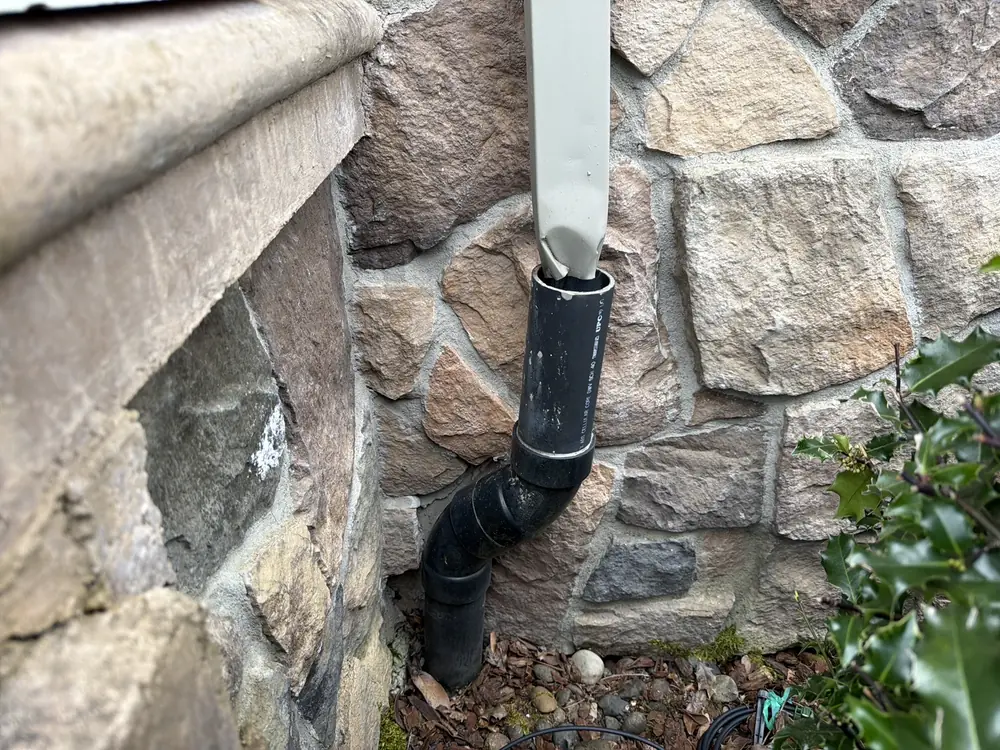
The underground drain line had pulled away from the downspout, so roof water can soak the soil by the foundation. Reconnecting it is recommended. Why gutters and downspouts matter -
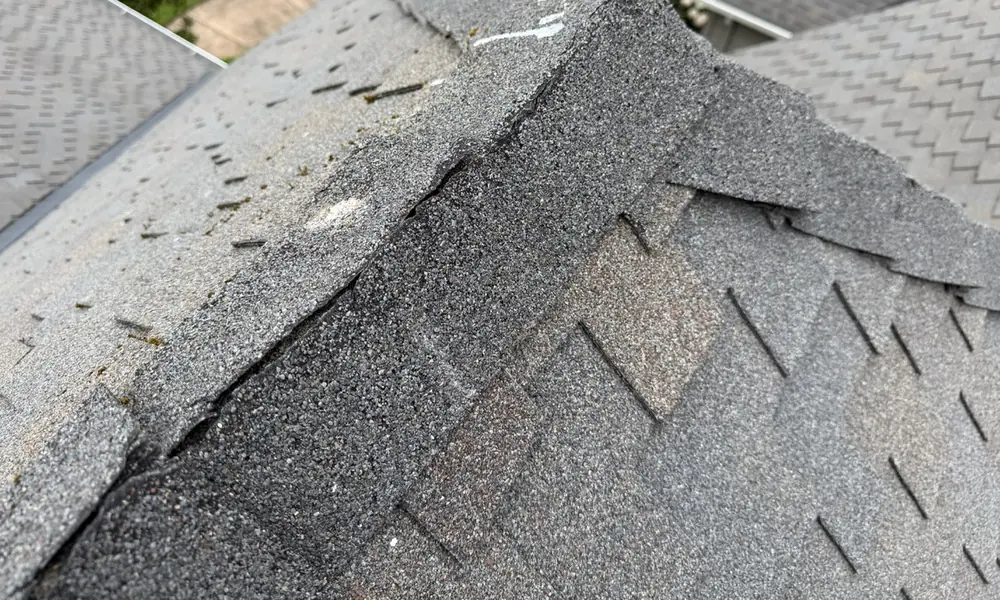
Ridge cap shingles had cracked and worn at the peak, where they shed water off the roof. A roofer should replace the damaged pieces. Roof checks before you make an offer -
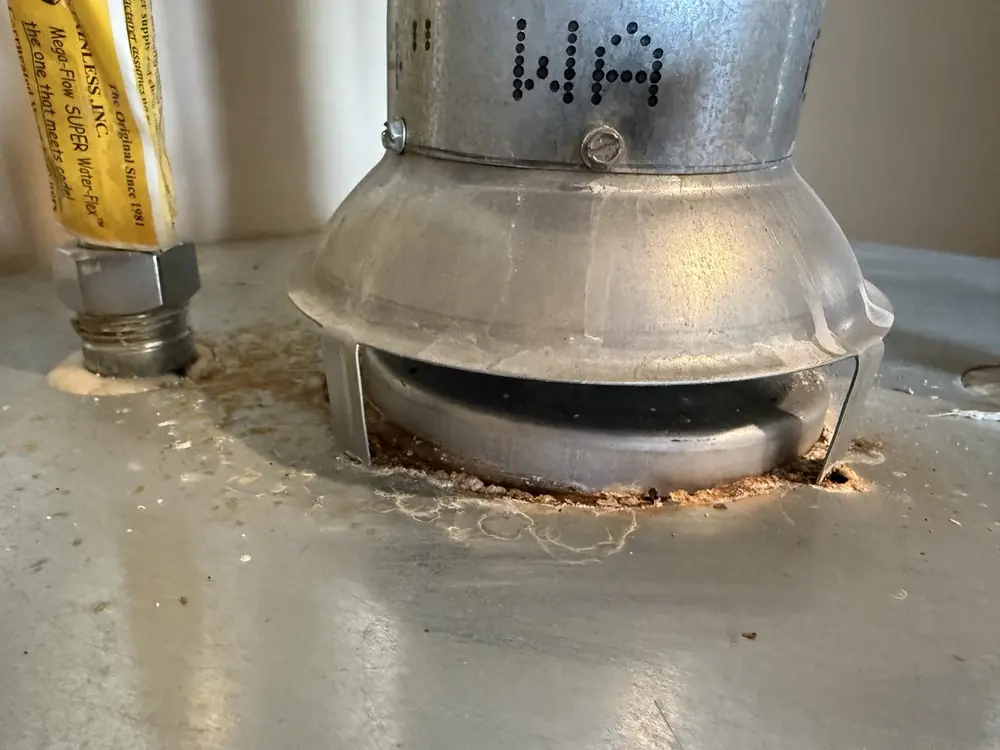
Staining and surface rust on top of an aging water heater can point to slow leaks. Budgeting for replacement was recommended. How to read a water heater label -

Discoloration consistent with mold growth on attic sheathing usually points to excess moisture or weak ventilation. What causes attic mold -
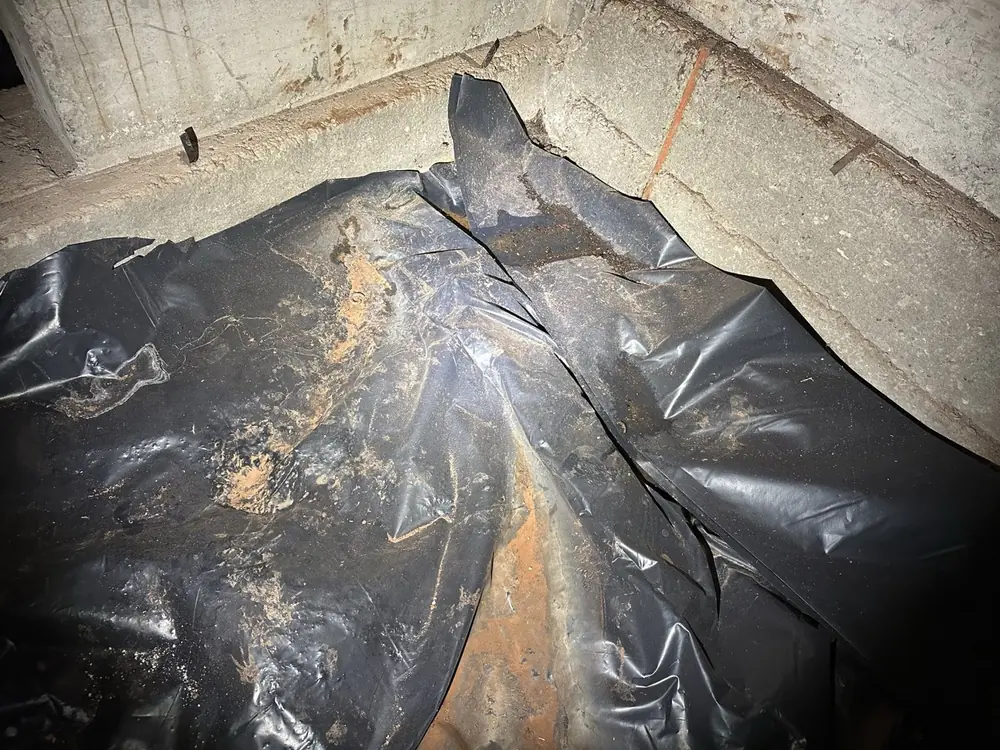
Moisture stains and some pooled water on the vapor barrier suggested the crawlspace drain was not keeping up. Crawlspace moisture and pooled water -
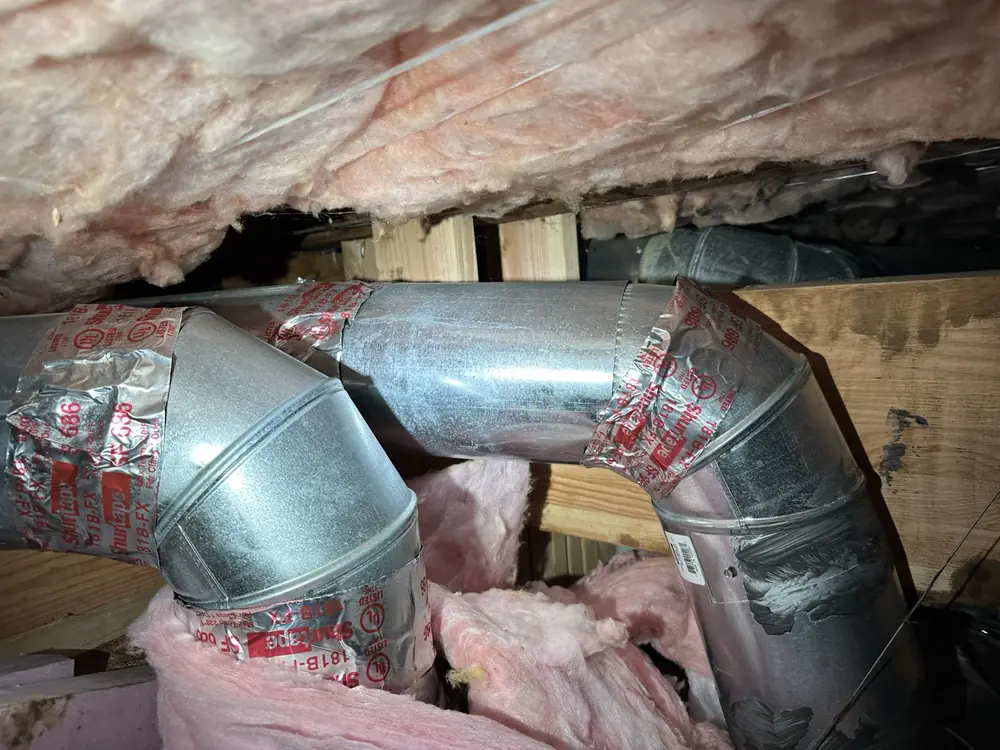
Uninsulated or unsealed ducts lose heat before air reaches the rooms, so the furnace works harder. HVAC checks before you make an offer
Flat-rate pricing
Starts at $395
- Full home inspection, roof to crawlspace
- Thermal imaging included
- Same-day digital report
Over 7,500 sq ft? Call (971) 202-1311. Full price list
Starts at $295
- Interior-only inspection: electrical, plumbing, HVAC
- Thermal imaging included
- Same-day digital report
Over 3,500 sq ft? Call (971) 202-1311. Full price list
With a home inspection $150
- Homes over 6,000 sq ft
- $225
- On its own
- $225
- Test length
- 48 hours
With a home inspection $245
- Homes over 3,500 sq ft
- $315
- Homes over 5,500 sq ft
- $385
- Includes
- 2 air samples + 1 control
- Lab analysis and report
- Included
- On its own
- $445
With a home inspection $295
- On its own
- $395
- In-ground spa
- Included
- Free-standing hot tubs
- Not inspected
What clients say
5.0 on Google from 38 reviews, as of October 2026. 5.0 on Yelp.
“A thorough and professional inspection. Russ answered all of my questions and made me feel confident about decisions that were required.”
“Russ did a wonderful job inspecting our house. He was very flexible with his scheduling and made time for us on a Sunday morning. His inspection was very thorough and detailed. I appreciated that he took extra time to walk us through everything and answer any questions that we had. He made several great suggestions to us for repairs/improvements. I have been through a couple of different inspections over the years and Russ' was the absolute best. I highly recommend him if you are a buyer and looking for a very detailed home inspector.”
“Russ was very detail-oriented and thoroughly inspected every inch of the house. His report made it easy to identify and address necessary repairs. We were very happy with his work, professionalism, and communication throughout the process. We would absolutely use him again for our one-year warranty inspection and any future inspections. Highly recommend!”
Sherwood home inspection FAQs
Questions buyers in Sherwood and Washington County ask most before booking.
Nearby areas
Seven days a week, within 40 miles of Oregon City, no travel fee. Farther out? Call to ask about the travel fee and availability.
Ready to schedule your Sherwood inspection?
Available 7 days a week. Online booking open 24/7.