Russ did a wonderful job inspecting our house. He was very flexible with his scheduling and made time for us on a Sunday morning. His inspection was very thorough and detailed. I appreciated that he took extra time to walk us through everything and answer any questions that we had. He made several great suggestions to us for repairs/improvements. I have been through a couple of different inspections over the years and Russ' was the absolute best. I highly recommend him if you are a buyer and looking for a very detailed home inspector.
Fairview's High Water Table Hides a Lot. Your Home Inspector Should Go in the Crawlspace.
Fairview sits on the Columbia River floodplain. Flat terrain, a high water table, and mid-century housing stock create an inspection profile unlike most Portland suburbs. Federal Pacific panels, galvanized pipes, and crawlspace moisture show up here on a regular basis. As a Certified Master Inspector® with 10+ years of inspection experience and hands-on work as a licensed general contractor, Russ knows what this terrain does to a house.

Fairview Know-How
These Homes Have History. So Do I.
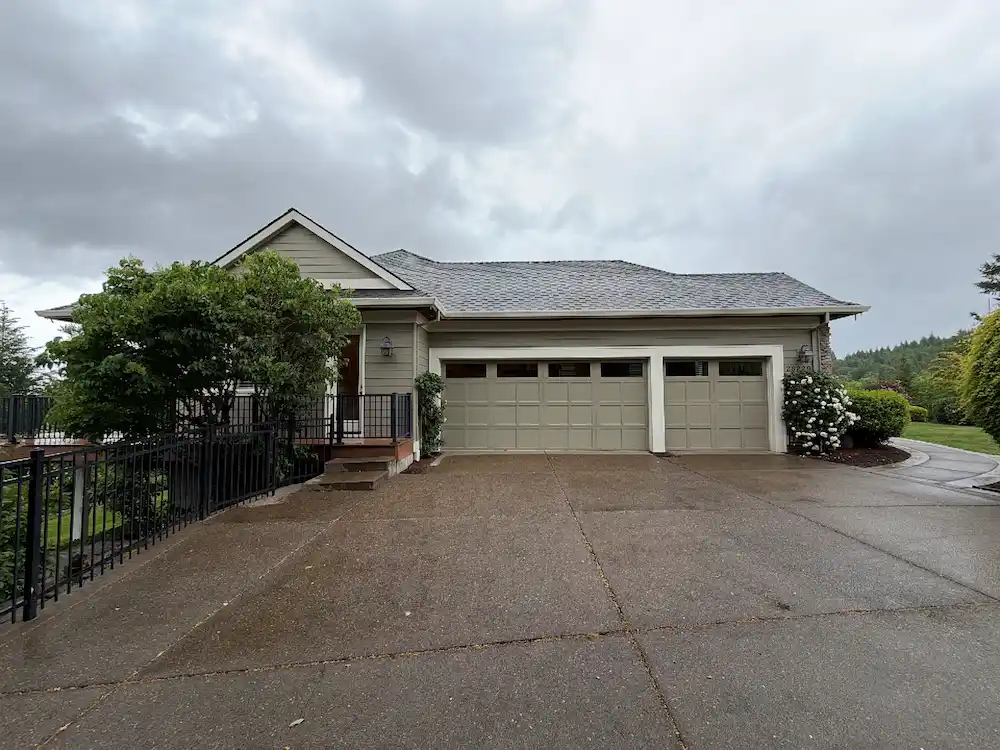
Fairview, Oregon
Fairview is a small city with a very specific geography. It sits on the flat Columbia River floodplain, sandwiched between Gresham and Troutdale, and that location drives almost everything that matters about inspecting homes here. The water table is high. The terrain doesn't drain naturally. Some parcels carry FEMA flood zone designations. And the housing stock is concentrated in two eras: post-war 1950s and 60s ranches, and a second wave of 1970s through early 90s subdivisions. Both eras predate modern vapor barrier and drainage requirements by decades.
Ten years of inspections, and I'm a licensed general contractor. I've replaced roofs, poured concrete, waterproofed showers, hung drywall, run wiring, set tile, and swapped siding and windows. Fairview's problems aren't subtle. A crawlspace that's been damp for 40 years has a look to it. So does galvanized pipe corroding from the inside. What you want is somebody who spots it fast and says plainly what it means.
When I walk a 1970s ranch in Fairview, I'm looking at the electrical panel first. Federal Pacific and Zinsco panels show up in this housing stock on a regular basis, and insurance carriers flag them. I'm physically entering the crawlspace, not photographing it from the hatch. And I'm running the thermal camera through every area where moisture tends to hide, because in this terrain it always hides somewhere.
I hold Certified Master Inspector® certification, Oregon OCHI license #1898, and Washington DOL license #1856. Every inspection includes free thermal imaging.
Fairview (Multnomah County) Housing Market
Showing Multnomah County, OR data
(Redfin does not publish city-level stats for this area).
$497,886
Median sale price
32 days
Median days on market
713
Homes sold per month
2,847
Homes for sale now
Before You Buy
Fairview Homes by Construction Era
Fairview's housing stock is dominated by mid-century and 1970s-80s construction, with a smaller share of 90s subdivisions and limited newer development. Each era has a distinct inspection profile shaped by this city's geography.
Pre-1965 Homes
Fairview's oldest homes include original farmsteads and the first wave of post-war ranch development. These are 60-plus-year-old structures that were built before modern electrical standards, before vapor barriers were required in crawlspaces, and before galvanized pipe was phased out. A home from this era is a home that has been absorbing whatever the Pacific Northwest throws at it for six decades.
Galvanized steel supply pipes corrode from the inside out. After 60-plus years, internal diameter is often severely restricted, water pressure drops at fixtures, and discoloration at the tap is a late-stage sign. Full repipe typically runs $10,000 to $25,000 depending on home size. Original cast iron drain lines from this era warrant a sewer scope before closing.
Electrical in pre-1965 homes reflects whatever the code allowed at the time, plus decades of owner updates that didn't always keep pace. Knob-and-tube wiring in attics and walls, 60-amp service panels, and fuse boxes all appear in this era. These homes take longer to inspect because every system needs careful documentation.
Common findings in pre-1965 homes
Galvanized steel supply pipes
Corroded internally. Restricted flow and discoloration common. Replacement typically runs $10,000 to $25,000.
Crawlspace moisture and wood rot
Flat Columbia floodplain terrain with minimal original vapor management. Moisture has had decades to do damage.
Knob-and-tube wiring and fuse panels
Original or partially original electrical systems common. Insurance carriers increasingly decline coverage.
Cast iron drain lines
60-plus years underground. Scale buildup, joint seepage, and root intrusion are consistent findings. Sewer scope essential.
Roofs well past service life
Often re-roofed once or twice. Approximate age, layers, and visible condition are documented.
1965 - 1985 Homes
This is Fairview's dominant era. The city expanded significantly through the 1970s, and the homes from this period are the ones most buyers encounter here. They look solid from the street. Inside, they carry a specific set of issues that show up with real consistency: Federal Pacific and Zinsco electrical panels, polybutylene plumbing in homes built or remodeled after the mid-1970s, and crawlspaces that were never designed to handle what Fairview's water table demands of them.
Aluminum wiring appears in some homes built between 1965 and 1974. It's not always a dealbreaker, but it requires documentation and specialist evaluation of connections. Cedar shake roofs from the 70s are well past service life. Fairview's 1980s composition roofs are now 35-40 years old and frequently flagged. And permit records for additions, garage conversions, and finished rec rooms from this period are inconsistent in unincorporated Multnomah County areas, which means unpermitted work is common.
Common findings in 1965 - 1985 homes
Federal Pacific and Zinsco panels
Documented safety concerns. Insurance carriers frequently flag or decline coverage. Replacement consistently recommended.
Polybutylene plumbing
Appears in 1975-1995 builds. Degrades with chlorine exposure. Identification before closing can help avoid a $10,000-$20,000 surprise.
Crawlspace moisture from high water table
Vapor barriers from this era are often inadequate or degraded. Fairview's flat terrain means water has nowhere to go.
Unpermitted additions and conversions
Garage enclosures, basement finishes, and carport additions from the 70s and 80s frequently lack documentation and have substandard framing or electrical.
End-of-life roofing
1980s composition roofs are 35-40 years old. Granule loss, cupping, and cracking in Fairview's wet climate appear earlier than in drier regions.
1985 - 2005 Homes
Homes from this period came with better electrical panels and updated plumbing, but they're now 20 to 40 years old and hitting the maintenance phase that every house eventually reaches. CPVC plumbing, used widely in Oregon new construction from about 1995 through 2005, becomes brittle with age and near heat sources. Cracking at fittings is the early warning sign. Composition roofs from the 1990s are at or past their expected service life.
Fairview's low-elevation drainage conditions remain a constant regardless of when a home was built. Improper grade, settled patios, and downspout extensions that terminate too close to the foundation send water toward crawlspaces and foundation walls. Deck ledger connections are a common code-era deficiency in homes with attached decks from this period, and wood rot at posts and ledger boards accelerates in this climate.
Common findings in 1985 - 2005 homes
CPVC plumbing brittleness
Becomes brittle with age and near heat sources. Cracking at fittings is the early warning sign. Common in 1995-2005 builds.
Roofs at or beyond service life
1990s composition roofs are 25-35 years old. In Fairview's wet Columbia River climate, degradation happens faster. Replacement typically runs $10,000 to $20,000.
Flat-terrain drainage and grading problems
Improper grade sends water toward the foundation in Fairview's flat floodplain terrain. Crawlspace moisture follows.
Deck ledger connection deficiencies
Common code-era deficiency. Wood rot at posts and ledger boards accelerates in Fairview's wet, low-elevation climate.
Composite wood siding failure
1990s hardboard and wood-fiber siding absorbs moisture in wet climates. Fails from the bottom up, often hidden behind paint.
2005 and Newer Construction
Fairview has limited new construction compared to outer suburbs like Happy Valley or Hillsboro. Where newer homes do exist, Fairview's geography doesn't change. Grading and drainage on recently disturbed lots near the floodplain are the primary inspection focus, along with standard new-construction defect categories: improperly sealed ductwork, flashing errors at windows and doors, and insulation gaps that thermal imaging can help spot and visual inspection misses.
Newer Fairview homes may also sit on lots that were previously agricultural or industrial land. Soil conditions, drainage infrastructure, and proximity to the Columbia River corridor all factor into what an inspection needs to cover. Municipal code inspections check minimum standards at specific construction phases. They do not evaluate the finished home.
Common findings in newer Fairview homes
Grading and drainage toward foundation
Especially critical near Fairview's floodplain. Recently disturbed lots can drain toward the house until grade fully settles.
HVAC installation defects
Improperly sealed ducts, disconnected exhaust vents, and uncalibrated systems found regularly in new construction.
Flashing deficiencies at windows and doors
Improper installation allows moisture into wall assemblies. In Fairview's wet climate, this becomes a problem fast.
Insulation and ventilation gaps in attic
Thermal imaging helps spot these. Hard to see by eye and often covered by builder warranty if reported in time.
Radon in every era
Multnomah County is EPA Zone 2. New homes are not exempt. Test every purchase, regardless of age.
Home Risk Quiz
Is Your Dream Home Hiding Significant Issues?
See Your Potential Home Through an Inspector's Eyes.
Transform your observations into a clear risk profile. In just two minutes, you will receive a breakdown of what a professional inspector would be concerned about based on what you saw.
2 minutes
Based on what you saw at the showing
No technical knowledge needed
Free Assessment
Begin
Assessment
8 quick questions. No contact info required.
1 of 8
01
How old is the home?
You'll have the year built from the listing or the seller. Home age is the single biggest driver of inspection risk.
02
What did the roof look like from the street?
Look for curling shingles, dark patches, missing granules, or visible moss. A good look at the roof from the ground can tell you more than you'd think.
03
Did you notice any musty smell inside the home?
A musty or earthy odor is the most reliable clue buyers can detect about crawlspace moisture or mold, even without going under the house.
04
Did you see the electrical panel? What did it look like?
It's usually in a utility room, garage, or hallway. Federal Pacific (orange breakers) and Zinsco panels are known fire risks and still common in Portland-area homes from the 1960s to 1980s.
05
Did you notice any water stains on ceilings or walls?
Look near the corners of ceilings, under windows, and in bathrooms. Even old-looking stains matter, they show water has been in places it shouldn't be.
06
How did the overall condition of the home feel?
Trust your gut. A home that feels well-loved and maintained usually is. One that feels neglected almost always has deferred items hiding out of sight.
07
Did the home have a finished basement, addition, or garage conversion?
These are some of the most common places to find unpermitted work. A finished space isn't automatically a problem, but without permits, there's no record of whether it was done safely.
08
Where are you in your homeownership journey?
This helps us tailor your results to your situation.
Know Your Neighborhood
Fairview Area by Area
Fairview is a compact city, but the housing stock and inspection priorities shift depending on where you are. Here is what buyers typically encounter across town.
Central Fairview (Original Town Core)
1950s - 1960s
Fairview's oldest residential streets. Ranch-style homes on modest lots, many with original galvanized supply lines, 100-amp panels, and crawlspaces that were built with minimal moisture management. Federal Pacific and Zinsco panels appear frequently here. These homes take longer to inspect because every system needs documentation. Buyers should budget for systems that are well past their original service life.
Fairview Lake Area
1970s - 1980s
Homes near Fairview Lake sit in some of the lowest-elevation terrain in the city. High water table conditions are pronounced here, and crawlspace moisture is a near-certainty in older homes without modern encapsulation. Some parcels in this area carry FEMA flood zone designations or sit just outside the mapped boundaries. Grade, drainage, and crawlspace condition are the top priorities for any inspection here.
NE Fairview (Halsey Corridor)
1970s - 1990s
A mix of 1970s subdivisions and later 1980s-90s development along and north of NE Halsey. Homes from the 1970s carry the typical electrical and plumbing concerns of that decade. 1980s and 90s homes are entering the age where roofing, HVAC, and sealants need attention. Unpermitted additions from the 80s in areas that were unincorporated at the time are not uncommon.
Fairview Slopes (East Side)
Mixed eras
The eastern edge of Fairview transitions toward slightly higher ground. Drainage conditions here are better than the flat floodplain core, but the housing stock is still dominated by mid-century and 70s-80s construction. Larger lots and some rural character. Outbuildings are common and can be added for $100. Well and septic evaluations, where still active, require separate specialists.
Fairview/Troutdale Border Area
1980s - 2000s
The western edge of Troutdale and eastern edge of Fairview blur together in some neighborhoods. Housing from the 1980s through early 2000s, with composition roofs now hitting end-of-life timing. Columbia River Gorge wind exposure is a factor for roofing and exterior siding condition here. FEMA flood mapping applies to some lower parcels near the Sandy River confluence corridor.
Newer Fairview Development
2000s - present
Fairview has limited new construction compared to outer suburbs, but where it exists, Fairview's geography doesn't change. Grading on recently disturbed lots near the floodplain corridor is the primary inspection focus, along with standard new-construction defect categories. Municipal code inspections check compliance at specific phases. They don't evaluate the finished home.
Multnomah County Risk Factors
What Makes Fairview Homes Different to Inspect
Fairview's Columbia River floodplain location, mid-century housing stock, and EPA Zone 2 radon designation create inspection concerns specific to this part of the Portland metro.
High Water Table and Floodplain Terrain
Fairview sits on the flat Columbia River floodplain. Water has nowhere to go here. The water table sits close to the surface year-round, and crawlspaces in this environment accumulate moisture regardless of surface drainage. Many older homes were never built with adequate vapor management. Some Fairview parcels carry FEMA flood zone designations. Others sit just outside mapped boundaries, which doesn't eliminate flood risk. I physically enter every accessible crawlspace and run the thermal camera through the space, because visual inspection from the hatch misses what this terrain does to a foundation over decades.
Consistent finding across all eras of Fairview homes
Federal Pacific and Zinsco Electrical Panels
Fairview's 1960s-80s housing stock carries a significant share of these known-problem panel types. Federal Pacific Stab-Lok breakers and Zinsco panels have documented failure rates under overload conditions. Neither performs reliably when it matters most. Insurance carriers increasingly flag them at renewal, and some decline coverage outright until replacement. Replacement typically runs $2,500 to $5,000 depending on panel size and accessibility. I look for the brand and document the visible condition in every report. If you don't know what panel brand a Fairview home has, the inspection will usually tell you.
Present in a significant share of 1960s-80s Fairview homes
EPA Radon Zone 2
Multnomah County carries EPA Radon Zone 2 designation, moderate radon potential. Radon is a colorless, odorless gas produced by uranium breaking down in soil and rock. It seeps into homes through crawlspace soil, foundation cracks, and sump areas. Fairview's crawlspace-heavy housing stock and flat floodplain geology give radon a direct path into living spaces. It's the second-leading cause of lung cancer in the U.S. Testing is the only way to know a home's actual level. Every Fairview purchase should include a radon test, new or old.
EPA Zone 2, moderate potential
Real Inspection Photos
Common Findings in Fairview-Area Homes
Real photos from Russ's inspection reports across the Portland and Vancouver area, showing issues common in Fairview homes. Every report includes photos like these.
-

Federal Pacific Stab-Lok breakers like these show up in a significant share of 1960s to 80s Fairview homes. Some may fail to trip, and insurers often ask about them. Federal Pacific Stab-Lok panels explained -
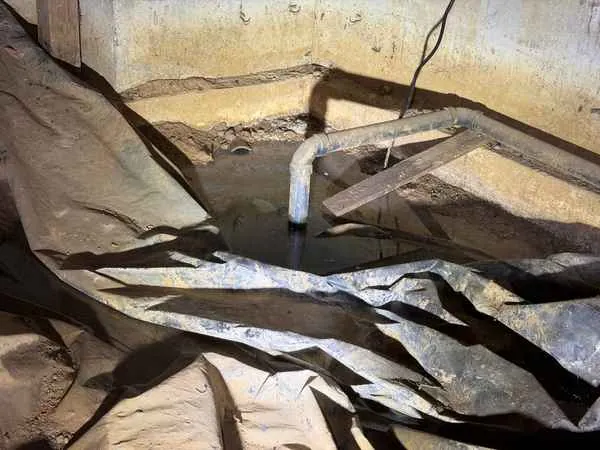
Standing water in a crawlspace with a submerged sump pump that was not running. On low, flat ground like Fairview's, a working pump matters. Sump pumps in Portland homes -
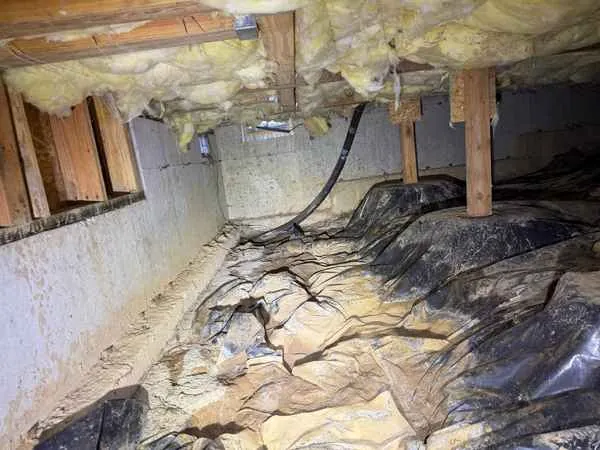
A displaced, mud-covered vapor barrier leaves bare soil open to the crawlspace. With a high water table, full soil coverage helps keep moisture down. Why crawlspace moisture is so common here -
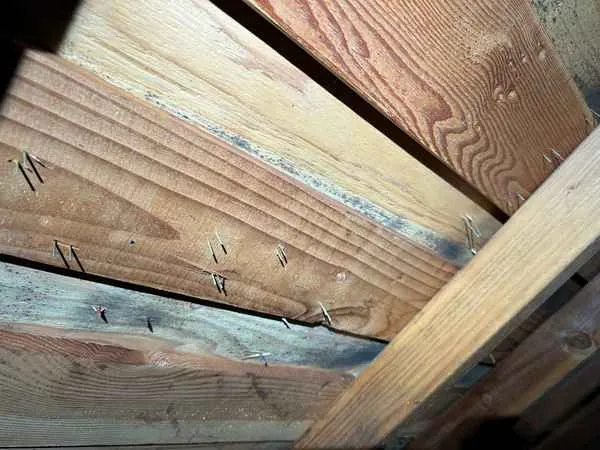
Dark staining consistent with mold on attic sheathing. It usually points to excess moisture or weak ventilation, which should be found and corrected. What causes attic mold and what it costs -

Cracked hip cap shingles and granule loss. Gaps in the cap can let water reach the roof deck, so a roofer should evaluate and repair them. What to check on a roof before an offer -

Rot along a fascia board at the roof edge. Fascia that stays wet can decay and loosen the gutters attached to it. Where dry rot hides in Portland homes
Inspection Scope
What We Check in a Fairview Home
Every inspection covers all major systems and accessible areas, roof to crawlspace. We physically enter accessible attics and crawlspaces. We operate the systems we can safely access and test a representative sample of components. We do not check boxes. We evaluate the home.
Roof & Attic
Shingles, flashing, gutters, attic insulation, ventilation, and moisture.
Electrical
Panel, breakers, wiring type, outlets, GFCI and AFCI protection.
Plumbing
Supply pipe material, drain lines, water heater, pressure, and fixtures.
HVAC
Furnace, AC, heat pump, ductwork, and distribution. Age and condition noted.
Foundation & Structure
Cracks, settling, retaining walls, and visible structural framing.
Crawlspace
Full physical entry. Moisture, vapor barrier, insulation, and wood rot.
Interior
Walls, ceilings, floors, windows, doors, and built-in appliances.
Exterior & Grading
Siding, deck, driveway, grading, and drainage away from foundation.
EPA Radon Zone 2
Radon Testing in Fairview
Multnomah County carries EPA Radon Zone 2 designation, moderate radon potential. Radon is a colorless, odorless radioactive gas produced by uranium breaking down in soil and rock. It seeps into homes through crawlspace soil, foundation gaps, and sump areas. Fairview's flat floodplain geology and crawlspace-heavy housing stock give radon a more direct path into living spaces than most Portland suburbs.
The EPA action level is 4 pCi/L. Your neighbor's test result doesn't predict yours. Soil conditions, foundation type, and ventilation all affect what a specific home measures. The only way to know is to test. That applies to every home in Fairview, regardless of age or construction type. New homes with passive mitigation systems still need to be tested.
We recommend radon testing on every Fairview inspection. If levels exceed 4 pCi/L, a mitigation system typically costs $800 to $1,500. That's a reasonable item to address before closing. It's much harder to resolve after.
Learn About Radon Testing →Radon facts for Fairview buyers
#2
Second-leading cause of lung cancer in the U.S.
After smoking. Responsible for about 21,000 deaths per year nationally.
48h
Test takes 48 hours
Continuous electronic monitor placed at the start of the inspection. Digital results delivered promptly.
$150
Added to your inspection
Standalone testing is $225. Add it at booking and save $75.
Transparent Pricing
Simple, Flat-Rate Pricing
No hidden fees, no surprise add-ons. Thermal imaging is included on every inspection.
Starter
Standalone Inspection
$395up to 1,000 sq ft
- Full home inspection
- Free thermal imaging
- Roof & crawlspace
- Detailed digital report
Most Common
Inspection + Radon
$545up to 1,000 sq ft
- Full home inspection
- Free thermal imaging
- Detailed digital report
- 48-hour radon test
Best Value
Inspection + Radon + Mold
$790up to 1,000 sq ft
- Full home inspection
- Free thermal imaging
- Detailed digital report
- 48-hour radon test
- Mold air sampling & lab results
Starter
Standalone Inspection
$295up to 1,000 sq ft
- Interior-only inspection
- Free thermal imaging
- Electrical, plumbing, HVAC
- Detailed digital report
Most Common
Inspection + Radon
$445up to 1,000 sq ft
- Interior-only inspection
- Free thermal imaging
- Detailed digital report
- 48-hour radon test
Best Value
Inspection + Radon + Mold
$690up to 1,000 sq ft
- Interior-only inspection
- Free thermal imaging
- Detailed digital report
- 48-hour radon test
- Mold air sampling & lab results
48-Hour Monitor Test
$150with home inspection
Clark County, WA sits in EPA Radon Zone 1, and elevated readings turn up across the Portland metro. Testing is the only way to know. Standalone test: $225
With home inspection$150
Standalone radon test$225
Test duration48 hours
Air & Surface Sampling
$245with home inspection
Portland’s wet climate makes mold a real concern. Air samples are analyzed by Sporecyte, an accredited laboratory, which identifies mold types and spore concentrations. Standalone mold inspection: $445
Standard package (2 air + 1 control)$245
Additional air samples$75 each
Surface swab$70 each
Lab analysis & reportIncluded
Pool & Spa Evaluation
$295with home inspection
Save $100 vs. standalone. In-ground spas included at no extra charge. Free-standing hot tubs are not inspected. Accessible components inspected, including shell, pump, filter, heater, and safety systems.
With home inspection$295
Standalone inspection$395
In-ground spa includedYes
Most reportsSame day
See our full pricing page for all size ranges.
Client Stories
What people say about Russ
Real reviews from clients across Portland Metro & SW Washington.
Russ was very detail-oriented and thoroughly inspected every inch of the house. His report made it easy to identify and address necessary repairs. We were very happy with his work, professionalism, and communication throughout the process. We would absolutely use him again for our one-year warranty inspection and any future inspections. Highly recommend!
We had two home inspections completed with Russ. The inspections were exceptionally thorough offering detailed insight into the homes. He did a great job with inspecting the entire roof and crawlspace. If I need another inspection, he would be my first call.
Russ did our 1 year warranty inspection and was absolutely amazing. Very thorough and found stuff that was never initially caught during our purchasing inspection. Thank you Russ!
I am a real estate agent in the Portland area that loves when my clients pick Russ. He has a non-alarmist way of describing his findings that helps each person to learn and understand in a better way. I appreciate his expertise and also, his sense of humor!
Great inspector! Honest and trust worthy
Highly recommend! Professional, thorough, and trustworthy are the words I would use to describe this business!!!
My wife and I had an excellent experience. They were professional, punctual, and extremely thorough. The report was detailed, well-organized, and delivered promptly, with clear photos. This inspection gave me complete confidence in my home purchase.
Very professional and honest inspector. Will not sugar coat the details. Very thorough and rigorous!
I can't recommend Russ enough, hands down, the most thorough, professional, and knowledgeable inspector out there!
Russ from Trusted Home Inspections is the best inspector ever. His report was so thorough and detailed that it made post inspection repairs and negotiations easy, reasonable and fair!!
Russ was a pleasure to work with. He communicated clearly, arrived on time, and conducted a thorough and detailed inspection. His professionalism gave me confidence in my home purchase decision.
Russ is fair, honest, and to the point. His extensive expertise is evident in his detailed reports. Nothing is missed!
Russ is a great inspector, honest, trustworthy, cares about his work being better than 'good enough,' and his expertise will be used in upcoming projects for family, friends, and coworkers!
We couldn't be happier! Russ was absolutely outstanding from start to finish, from the roof and attic to the foundation, electrical, plumbing, and everything in between. He did a radon test for us as well and the whole process was smooth.
Excellent home inspection service! Thorough, professional, and easy to understand. The inspector was patient, detailed, and provided a clear, well-organized report quickly. Highly recommend!
If you want an honest truth about any dwelling, call Russ. He will do his due diligence and put it in writing. 10/10 recommended
We had an excellent experience working with Russ. Professional, punctual, and extremely thorough. His report was detailed, easy to follow, and delivered promptly. We felt confident moving forward thanks to his expertise.
Russ is extremely knowledgeable and personable. I have used his services several times. In addition to his extensive experience, he also has a solid construction background, so he really knows what's what. Highly recommend!
If you're looking for an inspector who will do an honest, thorough inspection, choose Russ @ Trusted Home Inspection. I don't know of another person I could recommend over him. 10/10!
Russ is an outstanding inspector. Extremely thorough and very knowledgeable. He will crawl where others won't, and will see what others are blind to. Would 100% recommend his company to EVERYONE.
Russ was very detailed and found out way more details that were missed by other inspectors. He is very knowledgeable and detail oriented! Will definitely go with him next time I need an inspection.
Russ came recommended by our agent, and it's easy to see why. Compared to friends who recently bought homes and used other inspection companies, the level of detail here was unmatched. We have no complaints and would absolutely work with them again.
Russ was fantastic. Very thorough, personably, and prompt. He even got up on a pretty steep roof in the rain, which I didn't expect. Would highly recommend him for your home inspection.
Russ was incredibly thorough, very friendly, and answered all of our questions. We are first-time buyers, and we felt very well taken care of by Russ. His report was super informative and detailed, and gave us great next steps. Thanks Russ!
Russ was incredibly thorough and detailed, and his inspection really made me feel more comfortable with my home purchase. Thank you, Russ!
Russ is very thorough and finds every little detail. Very honest inspector and I can rest assured knowing my home was inspected by him.
We had an excellent experience with our home inspector. He was professional, thorough, and took the time to explain everything clearly. The inspection was very detailed, and the report was easy to understand with helpful photos and recommendations. He identified issues that could have easily been missed and gave us confidence in our home purchase. I highly recommend his services to anyone looking for a knowledgeable and trustworthy home inspector. Thank you for the outstanding work!
Russ did a fabulous job inspecting our home. Not only was he thorough and professional, but he offered supportive follow-up via an in-depth 2-year maintenance calendar. He is a very clear communicator, very honest. Since living in the house, our experience noticing small quirks or repair items in the home matches Russ's inspection notes perfectly. Don't hesitate to work with him!
Russ did an 11 month warranty inspection for me and was incredibly thorough. He found over 50 items that needed to be addressed before the builder's warranty expired. What I appreciated most is that he actually listened to the concerns I raised and took the time to look into them. The report he gave was detailed and easy to follow, which made it simple to pass along to the builder. If you're looking for a home inspector who's meticulous and genuinely looks out for his clients, I would highly recommend Trusted Home Inspections.
Russ was AMAZING! Super thorough, responsive and gave us so much detail. The seller had done a pre-inspection and Russ did one for us as the seller. No comparison. We felt so confident going into negotiations and understanding everything. Hire Russ. You won't regret it.
Russ was great to work with! Timely, efficient and very easy to ask questions along the way. At the end of this inspection he answered all our questions without making us feel rushed! He made the whole process super easy and straightforward. Thank you!
A thorough and professional inspection. Russ answered all of my questions and made me feel confident about decisions that were required.
Super thorough and kind. Feel good with their assessment and feedback.
Russ is thorough, kind, and wants what is best for his customers. Highly recommend!
Excellent work, I am very pleased!!!
Thorough inspection and timely report
Common Questions
Fairview Home Inspection FAQs
Questions buyers in Fairview and Multnomah County ask most before booking.
Fairview home inspections start at $395 for homes up to 1,000 sq ft and scale by square footage up to $845 for homes up to 5,000 sq ft. Free thermal imaging is included at every price point. Radon testing is $150 when added to your inspection. See full pricing at trustedhome.org/pricing.
Fairview's mid-century and 1970s-80s housing stock produces consistent findings: Federal Pacific and Zinsco electrical panels, crawlspace moisture from the Columbia River floodplain proximity, aging composition roofs at or past service life, galvanized supply lines in pre-1970 homes, and unpermitted additions from the 1970s and 80s. The flat terrain and high water table make crawlspace moisture a near-constant finding across all eras.
Yes. Fairview sits adjacent to the Columbia River floodplain. Some areas carry FEMA flood zone designations. Even outside mapped flood zones, the flat terrain and high water table create persistent crawlspace moisture conditions. Russ physically enters every accessible crawlspace and uses thermal imaging to look for signs of hidden moisture that visual inspection misses. This is not a formality in Fairview. It's a priority.
Yes. Fairview is in Multnomah County, which the EPA rates as Zone 2, moderate radon potential. Fairview's crawlspace-heavy housing stock and flat floodplain geology give radon a direct path into living spaces. Radon testing is recommended for every Fairview home purchase. It's $150 when added to your inspection. Standalone testing is $225.
Most Fairview home inspections take 2.5 to 3.5 hours. Fairview's housing stock skews toward the 1960s through 1990s, so inspections often include crawlspace entry and electrical panel evaluation alongside the standard scope. Older homes on the pre-1965 side, or homes with outbuildings, add time. You're welcome to attend the entire inspection or join for the walkthrough at the end.
Thermal imaging is included at no extra charge on every inspection. In Fairview's high water-table environment, the infrared camera often shows temperature differences that point to crawlspace moisture, wall moisture, and electrical anomalies that are invisible to the naked eye. There is no upsell. Learn more about thermal imaging.
Certified Master Inspector® (CMI®) is a board-certified designation from the Master Inspector Certification Board. To qualify, an inspector needs at least three years in the inspection business, 1,000 or more fee-paid inspections and hours of training and education combined, completed professional education, agreement to the board's code of ethics, and consent to periodic criminal background checks. Russ is Oregon City's only Certified Master Inspector® with 10+ years of home inspection experience and 100+ inspectors trained, serving Fairview and all of Multnomah County. Learn more about the CMI® designation.
Your report is delivered through Spectora with high-resolution photos of every significant finding, severity ratings, and plain-language explanations. The priority is accuracy and detail. Most reports go out the same day. After you receive your report, call or text with any questions. Unlimited follow-up is included.
Yes. Trusted Home Inspections is veteran-owned and takes 10% off the inspection fee for veterans, active duty, reservists, National Guard members, and military families. Use code MILITARY10 at booking. 10% off the inspection fee is also available for police, fire, EMTs, paramedics, dispatchers, and retired first responders. Use code RESPOND10. See full details at trustedhome.org/military-discount.
That decision is yours and your agent's to make, and the inspection contingency period is when you have it to make. After closing, you don't. The report is your documentation. Russ is available after delivery to help you understand what is critical, what is manageable, and what requires a specialist to evaluate further.
Where We Inspect
Serving Portland Metro & Southwest Washington
Available 7 days a week. No travel fee within 40 miles of Oregon City, and $50 past that. Not sure if we cover your area? Just call.

Oregon Certified
OCHI Lic. #1898

Washington Licensed
DOL Lic. #1856
Multnomah County home inspections. Portland and the rest of Multnomah County are full of older housing stock, including 1920s craftsman bungalows in SE Portland, Pearl District lofts, and mid-century homes in NE Portland. Older homes mean knob-and-tube wiring, cast iron drains, and aging foundations. I’ve inspected hundreds of homes across Multnomah County and know what to look for in each neighborhood.
Clackamas County home inspections. Clackamas County is home base for me. Oregon City, Lake Oswego, West Linn, and Happy Valley are where I do most of my work. EPA rates Clackamas County as Radon Zone 3, but individual homes still test high, so radon testing belongs on every Clackamas County home inspection. I know the local builders, the common defects, and the soil conditions that drive moisture problems in this part of the metro.
Washington County home inspections. Beaverton, Hillsboro, Tigard, and Tualatin are growing fast, with new construction next to homes from the 70s and 80s. Washington County home inspections often catch builder-grade shortcuts in newer subdivisions and aging mechanical systems in established neighborhoods. The wet Tualatin Valley climate also makes moisture intrusion and crawlspace issues more common than buyers expect.
Clark County home inspections in Southwest Washington. Vancouver, Camas, Washougal, and Battle Ground sit just across the Columbia River, and I’m licensed in Washington (DOL #1856) to inspect them. Clark County home inspections come with their own quirks: hillside foundations in Camas, manufactured homes in outlying areas, and the same wet Pacific Northwest climate that drives moisture and mold concerns. Same standards I apply on the Oregon side, no extra travel fee.
Don’t see your city? We likely cover it.
View All Service AreasReady to Schedule Your Fairview Inspection?
Available 7 days a week. Online booking open 24/7.