La Center's Rural Homes Span a Hundred Years. Your Inspector Should Know Every Era.

La Center's housing stock runs from original farmhouses on private wells to 1990s commuter subdivisions to recent hillside builds. Clark County's rainy climate, rural acreage properties, and the Washington State license requirement make this a different inspection market than Portland. As a Certified Master Inspector® with 10+ years of inspection experience and hands-on work as a licensed general contractor, and holder of WA DOL #1856, Russ is fully authorized and knows what to look for here.

Russ Motyko, Certified Master Inspector performing a home inspection in La Center WA
3,000+
Inspections in Oregon & Washington
5.0
Google & Yelp Rating

These Homes Have History. So Do I.

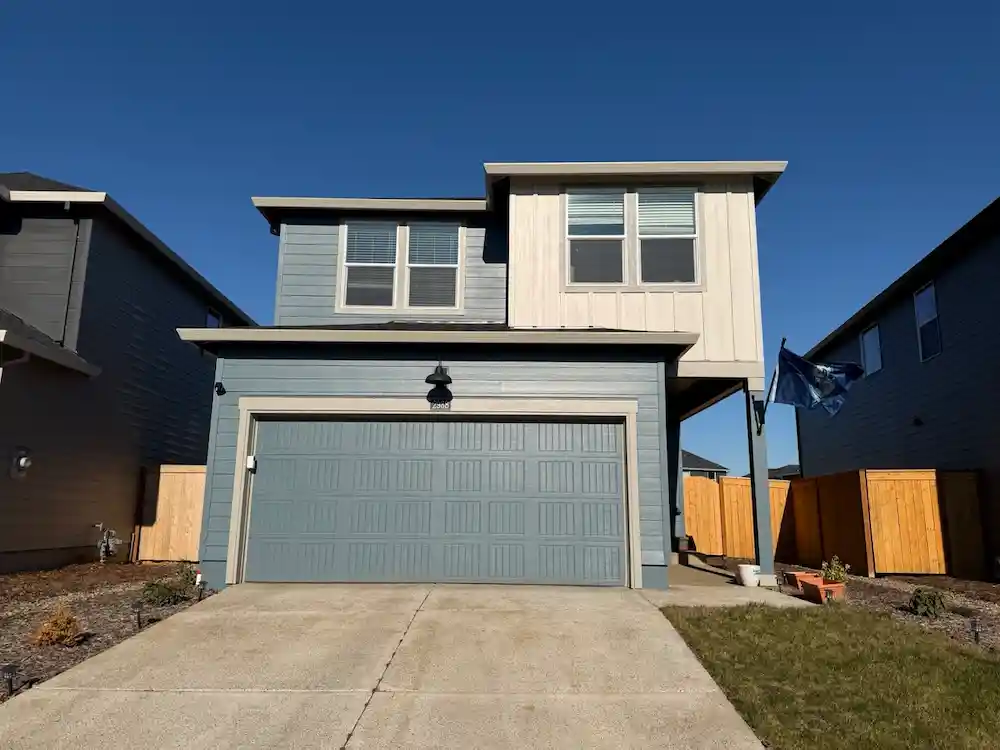
A La Center Washington home representative of the rural Clark County housing stock Russ inspects
La Center, Washington

La Center is about 25 miles north of Portland, where the East Fork Lewis River meets the Chelatchie Prairie. It's a small city of roughly 3,500 people, and the housing here reflects its rural roots: original farmhouses on acreage, 1960s and 70s rural builds with well and septic, 1990s subdivision homes that went up when Portland commuters discovered the area, and a handful of newer builds on hillside parcels. That range of housing eras and land types is the central fact of every La Center inspection.

I have 10 years of inspector experience, and I am also a licensed general contractor. My specialty is difficult and high-end framing, but I've replaced roofs, built and installed cabinets, ran wiring, poured concrete, waterproofed showers, set tile, replaced siding and windows, installed drywall, and set doors. That background matters here. When I walk a 1968 farmhouse with a converted outbuilding and a septic system that's been in the ground since Ford was president, I'm reading it as both an inspector and as someone who has built and repaired homes from the ground up.

The other thing that matters in La Center: most Oregon-based inspectors cannot legally inspect homes in Washington. Washington State requires its own license. I hold WA DOL #1856, issued by the Department of Labor and Industries, along with Oregon OCHI #1898. I also taught Washington's Fundamentals of Home Inspection course, which means I know the state-specific standards that apply to every inspection I do here.

I hold Certified Master Inspector® certification. Every inspection includes free thermal imaging, which in La Center's wet rural environment is genuinely one of the most important tools I bring.

La Center Homes by Construction Era

La Center's housing spans more eras than most Portland-area communities. Each decade has its own inspection profile, and rural land adds scope that metro homes don't have.

Pre-1965 Homes

La Center's oldest properties are original farmsteads. These predate the area's residential development entirely. Think post-and-pier or partial perimeter foundations, knob-and-tube or early 60-amp electrical, galvanized supply lines, single-pane windows, and no vapor barrier. Every system is at or past its design life. Many have been updated piecemeal by multiple owners over 60-plus years, which means mixed-era materials and inconsistent workmanship throughout.

Permit records for work done on rural Clark County properties before the 1980s are often incomplete or nonexistent. Additions, outbuilding conversions, and electrical upgrades from that period may have no documentation at all. That's not uncommon here, but it means the inspection needs to evaluate what's actually there rather than relying on any paper record.

Sewer scoping is especially important on these properties. Cast iron drain lines and original septic systems from before 1960 have been in the ground for a long time. Wellhead conditions on properties still on private water should be flagged for a specialist evaluation.

Common findings in pre-1965 La Center homes
Galvanized steel supply pipes
Corrode from the inside out. Restricted flow, rust-colored water, and low pressure are late-stage symptoms. Full repipe is the only fix.
Post-and-pier or partial perimeter foundations
No continuous perimeter. Common on farmhouses. Settling, rot at bearing points, and inadequate support are typical findings.
Knob-and-tube or early 60-amp electrical
Flagged by most insurers. Insufficient for modern loads. Often mixed with later updates in a way that creates hidden hazards.
No crawlspace vapor barrier
Bare soil under the home in Clark County's climate produces persistent moisture. Wood rot and pest damage follow.
Unpermitted additions and outbuildings
Older Clark County rural work often has no permit record. Substandard framing, electrical, and insulation are the consistent result.

1965 - 1985 Homes

Early acreage residential development in La Center. These are the homes that came up as rural Clark County became more accessible. Federal Pacific Stab-Lok and Zinsco panels appear consistently in this cohort. Aluminum branch wiring was used in some homes built between 1965 and 1974, which requires identification before closing because of its different expansion characteristics and connection requirements compared to copper.

Many properties from this era are still on well and septic. Systems that have been in the ground since 1970 or 1975 are now 50-plus years old. The inspection covers visible conditions at the wellhead and septic access area. Specialist evaluation is a separate step, but it's an important one on any La Center property with private utilities from this decade.

Cedar shake roofing from the 1980s end of this era is at or past service life on most La Center homes. Clark County's rainfall load accelerates wear. Condition and remaining service life are documented on every roof inspection.

Common findings in 1965 - 1985 La Center homes
Federal Pacific and Zinsco panels
Documented safety concerns. Insurance carriers frequently flag or refuse coverage. High-priority replacement items.
Aluminum branch wiring (1965 - 1974 builds)
Not inherently unsafe if properly maintained, but connections require specific devices and regular monitoring. Identified and documented on every inspection.
Aging well and septic systems
50-plus years in the ground. Specialist evaluation is a separate step, but visible conditions at the wellhead and septic access are documented.
Cedar shake roofs at end of life
1980s cedar shake in Clark County's climate has typically reached or exceeded its service window. Condition and replacement timeline are documented.
Crawlspace moisture and degraded vapor barriers
1970s single-layer poly barriers shift and degrade over time. Clark County's climate keeps soil wet through long winters. Wood rot and pest damage follow.

1985 - 2005 Homes

Portland commuter accessibility drove subdivision development in La Center through the 1990s and into the early 2000s. These are the homes on cleared rural lots with better electrical panels, copper plumbing, and composition roofing. They look more modern than the older farmhouses. But they're 20 to 40 years old now, and the systems that were new in 1995 are aging on schedule.

First-generation composition roofs from the 1990s are in the 25-to-35-year range. Granule loss, failing sealant, and compromised flashing are the things to look for. Grading on lots that were cleared from agricultural or forested land is a recurring finding here. Water moves toward foundations on a meaningful number of these properties. Downspout termination directly at the slab, compacted drainage swales, and settled concrete pads are all documented where present.

HVAC systems from this era are approaching or past typical replacement age. Units from 1995 or 1998 are 25 to 30 years old. Age, condition, and remaining service life are always noted in the report.

Common findings in 1985 - 2005 La Center homes
Composition roofs at end of service life
1990s composition in Clark County's rainfall climate wears faster than manufacturer ratings suggest. Granule loss and failing sealant are consistent findings.
Drainage and grading toward the foundation
Cleared rural lots with natural terrain grades often send water toward the home. Common and expensive if not addressed before closing.
HVAC systems at or past replacement age
Systems from 1993 to 2000 are 25 to 30-plus years old. Age, condition, and service history noted in every report.
Crawlspace moisture in a wet climate
Clark County receives 40 to 45 inches of rainfall annually. Vapor barriers from this era have seen 25-plus years of that climate and often show it.
Unpermitted outbuilding additions
Rural La Center properties from the 1980s and 90s frequently have shop additions or barn conversions with no Clark County permit documentation.

Rural Acreage and New Construction

La Center's rural acreage properties are a category of their own. A single parcel might have a primary residence from the 1970s, a shop addition from the 1990s, and a detached garage from 2005. Each structure gets evaluated on its own era and visible condition. Unpermitted electrical in detached buildings is one of the most consistent findings on these properties. DIY wiring in shops and barns often lacks proper grounding, correct circuit protection, and weather-appropriate wiring methods.

Newer construction in La Center is limited, but present. Clark County permit and inspection processes apply. For recent builds on hillside parcels, grading quality, exterior sealing, and HVAC installation are the primary focus areas. Builder-installed systems on rural lots sometimes reflect the shortcuts that come from working outside the denser suburban market where inspectors are more common.

For buyers in new or recent construction, the 11-month warranty inspection documents defects before the builder's one-year warranty expires. The clock starts at closing.

Common findings in rural acreage and newer La Center homes
Unpermitted electrical in detached structures
Shops, barns, and outbuildings on rural parcels frequently have DIY or unpermitted wiring. Fire and safety risks with no Clark County permit record.
Mixed-era materials from multiple decades
Properties with structures from multiple eras require evaluation of each one independently. Condition varies widely across the same parcel.
Grading on hillside and cleared rural lots
Natural terrain grades that weren't corrected during construction send water toward foundations. Common in La Center's rural parcel development.
Wood stove clearance deficiencies
Rural La Center homes often use wood stoves as primary or supplemental heat. Clearances and visible firebox condition are inspected on every home where present.
Radon via crawlspace soil contact
Rural La Center homes with dirt-floor or vented crawlspaces have direct soil contact. Degraded vapor barriers accelerate radon entry into living spaces.
Home Risk Quiz

Is Your Dream Home Hiding Significant Issues?

See Your Potential Home Through an Inspector's Eyes.

Transform your observations into a clear risk profile. In just two minutes, you will receive a breakdown of what a professional inspector would be concerned about based on what you saw.

2 minutes
Based on what you saw at the showing
No technical knowledge needed
Free Assessment
Begin Assessment

8 quick questions. No contact info required.

1 of 8
01

How old is the home?

You'll have the year built from the listing or the seller. Home age is the single biggest driver of inspection risk.

02

What did the roof look like from the street?

Look for curling shingles, dark patches, missing granules, or visible moss. A good look at the roof from the ground can tell you more than you'd think.

03

Did you notice any musty smell inside the home?

A musty or earthy odor is the most reliable clue buyers can detect about crawlspace moisture or mold, even without going under the house.

04

Did you see the electrical panel? What did it look like?

It's usually in a utility room, garage, or hallway. Federal Pacific (orange breakers) and Zinsco panels are known fire risks and still common in Portland-area homes from the 1960s to 1980s.

05

Did you notice any water stains on ceilings or walls?

Look near the corners of ceilings, under windows, and in bathrooms. Even old-looking stains matter, they show water has been in places it shouldn't be.

06

How did the overall condition of the home feel?

Trust your gut. A home that feels well-loved and maintained usually is. One that feels neglected almost always has deferred items hiding out of sight.

07

Did the home have a finished basement, addition, or garage conversion?

These are some of the most common places to find unpermitted work. A finished space isn't automatically a problem, but without permits, there's no record of whether it was done safely.

08

Where are you in your homeownership journey?

This helps us tailor your results to your situation.

La Center Area by Area

La Center's housing ranges from original farmsteads to commuter subdivisions to large rural acreage. Here's what buyers typically encounter in each part of town.

Original Farmsteads
Pre-1960

La Center's oldest properties predate residential development entirely. These are rural farmhouses, often on three or more acres with private well and septic. Every major system is at or past its design life. Permit records from this era are often incomplete or missing. Count on a longer inspection and a thorough look at every system, including visible wellhead and septic access conditions.

Early Rural Residential
1960s - 1970s

Acreage homes that came up as rural Clark County began attracting buyers. Federal Pacific and Zinsco panels are common. Aluminum branch wiring appears in some 1965-1974 builds. Many are still on well and septic from original construction. These properties add scope because of the mix of utility types and the age of every major system.

1980s Rural Builds
1980s

Better electrical and plumbing than earlier stock, but cedar shake roofs from this decade are at end of life across Clark County. HVAC systems are 35 to 40 years old. Outbuilding additions from this period frequently lack permit documentation. These are solid homes that need a detailed look at the systems that have aged the most.

Commuter-Era Subdivisions
1990s - 2000s

Portland commuter accessibility drove new subdivision development in this era. Better systems than the older rural stock, but first-generation composition roofs are hitting 25 to 35 years. Grading on cleared rural lots is a recurring concern. These homes are now old enough to be in the maintenance phase, and the inspection reflects that.

Rural Acreage Properties
Mixed eras

Large lots with outbuildings, shops, or agricultural structures from multiple decades. Each structure is evaluated separately. Unpermitted electrical in detached buildings is one of the most consistent findings in La Center. Well and septic evaluations require separate specialists, but visible conditions at both are documented in the standard inspection.

Newer Hillside and Rural Builds
2010s - present

Newer construction in La Center is limited but present. Clark County permit processes apply. For hillside parcels, grading quality and exterior sealing are the first things I look at. Newer doesn't mean defect-free. Builder work on rural lots outside the dense suburban market sometimes reflects shortcuts that municipal inspectors didn't catch at the phase inspections.

What Makes La Center Homes Different to Inspect

La Center's rural character, mixed construction eras, Clark County's wet climate, and the Washington State license requirement create an inspection profile you don't see in most Portland-area markets.

Washington State License Required

Oregon licensure does not authorize home inspection work in Washington State. Washington's Department of Labor and Industries issues a separate license with WA-specific education, examination, and continuing education requirements. Many inspectors who serve the Portland-area market are not licensed in Washington and cannot legally work in La Center. Russ holds WA DOL #1856 and also taught Washington's Fundamentals of Home Inspection course. He knows what Washington-specific standards require on every inspection he does here.

Most OR inspectors cannot legally work in La Center

Crawlspace Moisture and Rainfall

Clark County receives 40 to 45 inches of rainfall annually. La Center's position along the East Fork Lewis River basin means that water moves through the landscape in ways that drive persistent crawlspace conditions. Many older rural homes were built without adequate moisture management. Single-layer vapor barriers from the 1970s and 80s shift and degrade over time, leaving areas of bare soil under the home through long Pacific Northwest winters. Russ enters every accessible crawlspace. Thermal imaging runs through the space where insulation may hide what the eye can't see.

40 - 45 inches of annual rainfall in Clark County

Unpermitted Rural Improvements

Outbuildings, shop conversions, barn-to-living additions, and detached structures on rural La Center properties frequently lack Clark County permit records. Work done in the 1970s through early 1990s on unincorporated Clark County parcels often has meaningful documentation gaps. DIY electrical in detached structures is one of the most consistent findings. Substandard framing, missing GFCI protection, and improper weatherproofing are the specifics that matter when you're deciding what you're buying.

Consistent finding on rural La Center parcels

Everything We Check in a La Center Home

Every inspection covers all accessible systems and components, roof to crawlspace. We physically enter attics and crawlspaces. We operate every system we can safely access. We do not check boxes. We evaluate the home.

Roof & Attic

Shingles, flashing, gutters, attic insulation, ventilation, and moisture.

Electrical

Panel, breakers, wiring type, outlets, GFCI and AFCI protection.

Plumbing

Supply pipe material, drain lines, water heater, pressure, and fixtures.

HVAC

Furnace, AC, heat pump, ductwork, and distribution. Age and condition noted.

Foundation & Structure

Cracks, settling, retaining walls, and visible structural framing.

Crawlspace

Full physical entry. Moisture, vapor barrier, insulation, and wood rot.

Interior

Walls, ceilings, floors, windows, doors, and built-in appliances.

Exterior, Outbuildings & Grading

Siding, deck, driveway, grading, drainage, and accessible outbuildings included in the sale.

Free Thermal Imaging on Every La Center Inspection

In La Center's wet rural environment, thermal imaging consistently surfaces hidden crawlspace moisture, insulation failures, wall moisture intrusion, and electrical anomalies that visual inspection alone misses. Clark County's rainfall makes this climate one where infrared isn't optional. Included at no extra charge on every inspection.

Learn More →
EPA Radon Zone 2

Radon Testing in La Center

Clark County, Washington is EPA Radon Zone 2, indicating moderate potential for elevated indoor radon concentrations. Zone 2 is a lower designation than the Zone 1 that applies to most Oregon counties, but moderate potential is not the same as low risk. Zone classifications are county-wide averages. Individual homes in Zone 2 can and do test above the EPA's 4 pCi/L action level. Your neighbor's test result doesn't predict yours.

Radon is a radioactive gas produced by uranium decay in soil and rock. It's the second-leading cause of lung cancer in the United States. It enters homes through crawlspace soil, foundation cracks, and sump areas. La Center's crawlspace-prevalent housing stock gives radon a direct route into living spaces, especially on older rural homes with degraded or absent vapor barriers.

We recommend radon testing on every La Center inspection. If levels exceed 4 pCi/L, a mitigation system typically costs $800 to $1,500. That's a manageable item to address before closing. It's much harder to deal with after.

Learn About Radon Testing →
Radon facts for La Center buyers
#2
Second-leading cause of lung cancer in the U.S. After smoking. Responsible for about 21,000 deaths per year nationally.
Zone 2
Clark County EPA radon designation Moderate potential. Individual homes within Zone 2 can and do exceed the action level. The zone is not a property-specific measurement.
48h
Test takes 48 hours Continuous electronic monitor placed at the start of the inspection. Digital results delivered promptly.
$150
Added to your inspection Standalone testing is $225. Add it at booking and save $75.

Simple, Flat-Rate Pricing

No hidden fees, no surprise add-ons. Thermal imaging is included on every inspection.

Starter Standalone Inspection
$395up to 1,000 sq ft
  • Full home inspection
  • Free thermal imaging
  • Roof & crawlspace
  • Detailed digital report
Book Now
Best Value Inspection + Radon + Mold
$790up to 1,000 sq ft
  • Full home inspection
  • Free thermal imaging
  • Detailed digital report
  • 48-hour radon test
  • Mold air sampling & lab results
Book Now

See our full pricing page for all size ranges.

What people say about Russ

Real reviews from clients across Portland Metro & SW Washington.

La Center Home Inspection FAQs

Questions buyers in La Center and Clark County ask most before booking.

No. Washington State requires home inspectors to hold a separate Washington State license. Oregon licensure alone does not authorize inspection work in Washington. Russ holds both Oregon OCHI #1898 and Washington DOL #1856, so he's fully authorized. He also taught Washington's Fundamentals of Home Inspection course. Most Oregon-based inspectors who serve the Portland market do not have the WA license and cannot legally inspect homes in La Center.
La Center home inspections start at $395 for homes up to 1,000 sq ft and scale by square footage up to $845 for homes up to 5,000 sq ft. Free thermal imaging is included at every price point. Rural properties with outbuildings take longer to inspect, but the pricing reflects the home's square footage, not the scope of the land. See full pricing at trustedhome.org/pricing.
La Center's rural and semi-rural housing stock produces consistent findings: crawlspace moisture from Clark County's annual rainfall, aging roof systems on pre-2000 homes, outdated electrical panels in older farmhouses, unpermitted outbuildings and shop additions in unincorporated Clark County areas, and HVAC systems approaching or past replacement age. On older rural properties, galvanized supply plumbing and aging well and septic systems are also common concerns.
Yes, though Clark County is EPA Zone 2 rather than Zone 1. Zone 2 indicates a moderate potential for elevated indoor radon concentrations. Individual homes within Zone 2 can and do test above the EPA's 4 pCi/L action level. La Center's crawlspace-prevalent housing stock gives radon a direct entry point. Radon testing is $150 when added to your inspection. Standalone testing is $225.
Russ's standard inspection covers the home structure, systems, and components visible and accessible at the time of inspection. Well and septic systems require separate specialist inspections. Russ will document visible conditions at the wellhead and septic access area and advise on what follow-up specialists to contact. For La Center buyers, clarifying current utility connections before closing is an important step.
Most La Center home inspections take 3 to 4 hours. Rural properties with outbuildings, crawlspaces, or well and septic systems add scope and can extend that time. You're welcome to arrive for the last 30 minutes for a focused walkthrough with Russ. That's often the most useful part of the inspection for buyers.
Thermal imaging is included at no extra charge on every inspection. In La Center's wet rural environment, it's one of the most effective tools for finding crawlspace moisture, hidden wall moisture, and insulation failures that are invisible to the naked eye. Learn more about thermal imaging.
Certified Master Inspector® (CMI®) is a board-certified designation from the Master Inspector Certification Board. To qualify, an inspector needs at least three years in the inspection business, 1,000 or more fee-paid inspections and hours of training and education combined, completed professional education, agreement to the board's code of ethics, and consent to periodic criminal background checks. For La Center buyers looking at rural homes with diverse construction histories, mixed utility infrastructure, and varying permit documentation, that level of field experience genuinely matters. Russ is Oregon City's only Certified Master Inspector® with 10+ years of home inspection experience and 100+ inspectors trained. Learn more about the CMI® designation.
Your report is delivered through Spectora with high-resolution photos of every significant finding, severity ratings, and plain-language explanations. The priority is accuracy and detail. Most reports go out the same day. After you receive your report, call or text with any questions. Unlimited follow-up is included.
Yes. Trusted Home Inspections is veteran-owned and takes 10% off the inspection fee for veterans, active duty, reservists, National Guard members, and military families. Mention your service when you book. See full details at trustedhome.org/military-discount.

Serving Portland Metro & Southwest Washington

Available 7 days a week. No travel fee within 40 miles of Oregon City, and $50 past that. Not sure if we cover your area? Just call.

40 miles, no travel fee
Available 7 days a week
Dual-licensed OR & WA
Oregon state-licensed home inspector seal
Oregon Certified OCHI Lic. #1898
Washington state-licensed home inspector seal
Washington Licensed DOL Lic. #1856

Multnomah County home inspections. Portland and the rest of Multnomah County are full of older housing stock, including 1920s craftsman bungalows in SE Portland, Pearl District lofts, and mid-century homes in NE Portland. Older homes mean knob-and-tube wiring, cast iron drains, and aging foundations. I’ve inspected hundreds of homes across Multnomah County and know exactly what to look for in each neighborhood.

Don’t see your city? We likely cover it.

View All Service Areas

Ready to Schedule Your La Center Inspection?

Available 7 days a week. Online booking open 24/7.